


How to Qualify a Chinese Factory for Bulk Inductor Buyers Beyond Price and MOQ
 Sep 28, 2026|
 View:17
You got a good price on inductors from a Chinese factory. Then the first shipment comes with quality issues. Suddenly, your savings disappear. This frustration happens often. The real problem is that you thought qualification was just one check. Actually, knowing how to qualify a Chinese factory is a process. The key is to check their systems, production depth, and operational risk. Below is a plan to focus on performance instead of just price. Use a qualified maker like Southern Electronic Element Factory as a model. This practical guide on how to qualify a Chinese factory will help you reduce risk.
Key Takeaways
Look at quality certifications such as ISO 9001 and IATF 16949 to make sure the factory meets high standards.
Check the factory's production capacity and automation to handle your order volume steadily.
Check how well the factory communicates and responds. These are signs of strong process control and reliability.
Think about the total cost of owning the product, including lead time stability and MOQ, not only the unit price.
Use a supplier checklist to make decisions based on facts and avoid risky suppliers.
How to Qualify a Chinese Factory: Quality Systems First
When you know how to qualify a chinese factory, you start with systems, not samples. A factory can send you perfect inductors one time. The real question is whether they can do it again for every batch. This is where quality control systems show which manufacturers are serious and which are just trading companies.
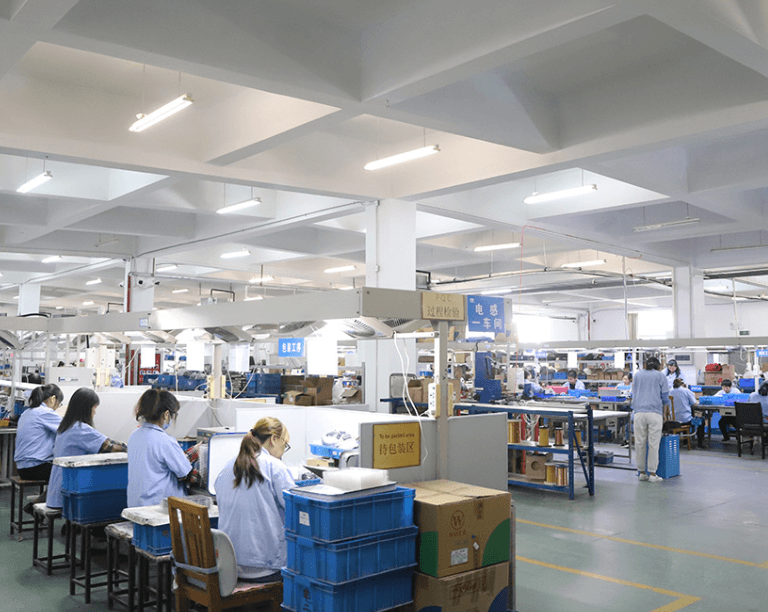
Certifications That Matter for Inductor Quality
Certifications tell you which standards a factory has agreed to follow. For bulk inductor orders, look past general claims. UL, IEC, and AEC-Q certifications matter because independent labs give them out. You send samples to these labs, and the reels come back with stamps that regulators and purchasing managers know. These marks prove the factory meets safety and performance standards.
For automotive inductors, IATF 16949 matters most. This standard builds on iso 9001 but adds rules just for cars. The International Automotive Task Force made it to bring quality management together across the world's car industry. Key processes need a Cpk of at least 1.67. Design lifespans usually go beyond 15 years with a zero-defect goal. Industrial-grade products, on the other hand, allow some failure rates.
The IATF 16949 standard aims to provide a unified quality management system framework for the global automotive manufacturing industry. Based on ISO 9001, it incorporates additional automotive-specific technical requirements.
The difference shows up in defect rates. A factory with only iso 9001 may run at Cpk 1.33, which gives about 63 PPM. A factory certified to IATF 16949 aims for Cpk 1.67 or higher, reaching about 0.57 PPM. That gap matters when you order millions of units.
Metric Benchmark | Applicable Standard | Defect Rate |
|---|---|---|
Cpk = 1.33 | ISO 9001 / standard automotive characteristics | ~63 PPM |
Cpk ≥ 1.67 | IATF 16949 safety-critical features | ~0.57 PPM |
You should check certifications on your own. Look at the issuing body's database. Make sure the certificate covers the exact product line you need. This step keeps your supplier qualification processes safe from fraud.
Process Control and Consistency Checks
Certifications open the door. Process control keeps quality steady. A strong quality control system has several parts:
ISO 9001 certified quality management makes sure processes are standardized and audited.
Careful material selection from trusted suppliers keeps magnetic performance stable.
Detailed work instructions guide every stage, from winding to insulation to assembly.
In-process testing and final checks catch defects early.
Full batch traceability makes ongoing support easier.
Working together on design cuts rework and boosts yield.
A manufacturer with over 30 years of experience and multiple production sites shows that these processes work at scale. Southern Electronic Element Factory runs three subsidiary companies and keeps strict quality control at all locations. Their 60-plus technicians follow written procedures for every product. This approach gives you quality consistency, not just lucky good results.
Consistent quality comes from the system, not the final test. When you audit a supplier, ask for control plans and inspection records. Ask for First Article Inspection reports. These documents show whether the factory uses strict quality control at every stage. They also show whether the factory can keep quality stable as volumes grow.
Your check of these systems predicts supplier performance better than any sample batch. A factory that writes everything down will meet your specs again and again. A factory that only relies on inspection will ship defects sooner or later.
Supplier Capacity Assessment: Technology and Volume
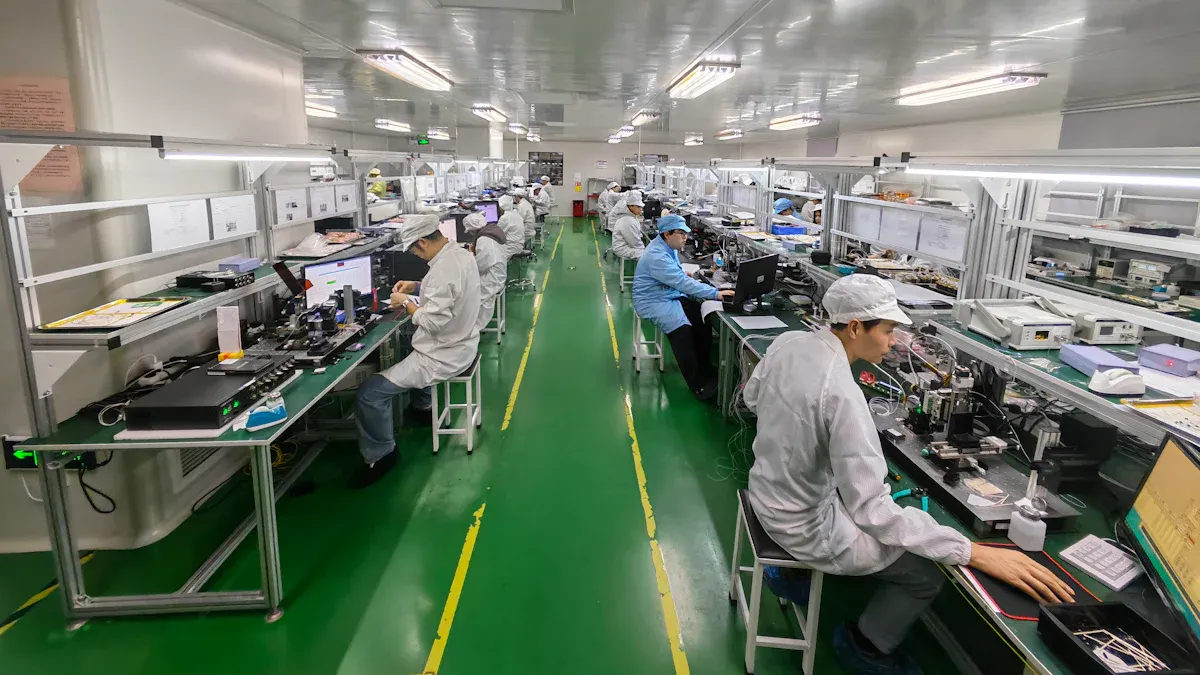
A supplier capacity assessment shows whether a factory can handle your exact inductor needs. This is about technical fit, not just volume. You need to check that the factory builds the right type of component for your application. High-frequency chokes and power inductors need different machines and skills. Ask for their monthly production capacity and check if it matches your order size.
Assessing Automation for Consistent Inductor Performance
Automation drives quality consistency in high-volume production. Manual winding causes variation in turn counts and wire tension. Automated lines remove that risk.
Automated inductor coil winding machines deliver consistent winding with precise control over the number of turns, wire tension, and layering patterns. Integrated sensors and monitoring systems detect faults or irregularities during winding, ensuring high product quality and minimizing defects.
You should ask which automated tests run on the line. The table below lists key metrics to verify during supplier capacity verification.
Automation Metric | What It Detects |
|---|---|
DC Resistance Test | Incorrect turn counts, wrong wire gauge, severe wire stretching |
Surge Comparison Test | Weak turn-to-turn insulation, layer-to-layer shorts |
Hipot Test | Insulation breakdown to ground, spacing violations |
Inductance and Q-Factor Measurement | Core alignment issues, air gaps, material variations |
Vision-Based Dimensional Inspection | Height, width, lead exit position, layer alignment |
These checks confirm that the factory controls quality at every stage.
Real-World Example: Toroidal Inductor Production
Toroidal inductors show what deep technical capability looks like. These components use powder-compressed magnetic cores with high saturation flux density. That design delivers low radiation noise and minimal magnetic leakage. A factory that builds them well is not just putting parts together.
A mature supplier like Southern Electronic Element Factory, with specialized lines for toroidal and common mode chokes, signals deep technical specialization. This lowers the risk of a factory cutting corners on your custom order. Their production capacity covers millions of units annually across multiple sites. You can trust their exact specifications and quality control.
Reliability, Communication, and Supplier Assessment Checklist
Communication is a Quality Metric for Bulk Buyers
You can learn about a factory's internal systems without visiting their plant. Pay attention to their answers on technical questions. Ask about inductance tolerance at a certain frequency. Ask about temperature rise at the highest rated current. A factory with weak process control gives unclear answers. They do not fully know their own limits.
A factory with strong systems gives clear, documented answers. They share test data without holding back. They explain their material choices in a simple way. This quick response shows their quality control. It proves they understand their own production line. It shows they track their quality numbers. Good communication means they will be reliable. If they cannot explain their process on a call, they cannot control it on the factory floor. This clue helps you remove risky suppliers early on.
Using a Supplier Assessment Checklist
A supplier assessment checklist takes the guesswork out of global sourcing. It organizes your entire checking process. Use this plan to review every possible partner. It gives you real facts instead of relying on a factory visit.
Technical Response Time: How fast do they answer specific requests? A slow reply often means they lack proper engineering support.
Willingness to Share Control Plans: Do they openly show their in-process inspection steps? Openness is a strong sign of good supplier performance and process maturity.
Lead Time Accuracy: Check how often they deliver on time compared to your schedule. Low on-time delivery is a big warning for future problems.
After-Sales Support: Do they have a clear process for bad parts? Strong support is important for long-term reliable delivery.
Track Record: Ask for specific customer references. Ask for their past delivery performance data.
Quality Metrics: Ask for PPM data. Look at their supplier performance scorecard from the last 12 months.
By using this checklist, you turn sourcing into a fact-based job. You pick better suppliers by choosing partners who value strong systems. You get steady quality by rewarding factories that write down and check every step.
Total Cost of Ownership: Understanding MOQ and Lead Time
The price for one unit is just one number on your sheet. The real cost of a bulk inductor order includes minimum order quantities, steady lead times, and the hidden costs of an unreliable supply. When you get good at understanding moq and lead time, you stop chasing the lowest quote and start protecting your production schedule.
How to Negotiate Minimum Order Quantities
Many buyers think minimum order quantities are fixed walls. They are not. MOQ is a number you can change in your total cost equation. Factories set MOQ to cover setup costs, material minimums, and production scheduling. You can change this number by talking it through honestly.
The most direct way to lower MOQ is to pay a higher unit price. A factory spreads fixed costs across fewer units, so they charge more for each piece. This trade-off makes sense for small trials or low-volume runs. But for bulk buyers, this approach often backfires. You pay more for each inductor and still face the same supplier risks.
A better plan for bulk buyers is to accept a slightly higher upfront MOQ from a stable supplier. A factory like Southern Electronic Element Factory, with over 30 years of experience and three subsidiary production sites, offers steady quality at scale. Managing many smaller, unreliable factories creates hidden costs. You handle more purchase orders, more incoming inspections, and more quality escapes. Each new supplier adds paperwork and risk. One reliable partner with a higher MOQ often saves more money over the year than five unstable vendors with lower entry barriers.
Calculating True Cost with Lead Time Stability
Lead time reliability is a hidden cost that destroys budgets. A supplier promises 8 weeks. Material shortages push delivery to 16 weeks. Your production line stops. You pay for faster shipping. You rush to find other parts. These costs are much bigger than any unit price savings.
You must figure out the true cost of a late shipment. Start with your line-down cost per hour. Multiply that by how long the delay lasts. Add faster freight charges. Add the engineering time spent finding substitutes. Add the customer penalties for missed deadlines. This total often is more than the entire value of your inductor order.
A factory with strong production capacity and proven supplier performance protects you from these losses. Southern Electronic Element Factory makes over 200 million pieces every year across many product lines. Their vertical integration lowers dependence on outside material suppliers. This structure supports steady lead times even when market conditions change.
When you check a new factory, ask for their on-time delivery rate over the past 12 months. Ask for data on their longest delay and how they fixed it. A factory that tracks these numbers shows maturity. A factory that cannot answer shows risk.
Quality and reliability go beyond the product itself. They include the supplier's ability to deliver the right quantity at the right time. Your total cost calculation must include this dimension. A cheap inductor that arrives late costs more than a fairly priced inductor that arrives on schedule.
Use this framework when you learn how to qualify a chinese factory. Price and MOQ matter. Lead time stability and supplier reliability matter more. The factory that delivers consistently becomes your partner. The factory that wins on price alone becomes your problem.
Why Choose us?
You have learned how to qualify a Chinese factory. You now know the four pillars: systems, production capability, communication, and total cost understanding. A factory like Changzhou Southern Electronic Element Factory shows these principles in real life. Their track record shows what a qualified partner looks like.
Their approach starts with raw material sourcing. They pick materials from trusted suppliers. They do factory visits and sample testing to make sure of strict compliance. Every production step—winding, tinning, wrapping, cutting—gets inspected. Each finished product passes functional, dimensional, and packaging tests before release. These steps build reliability into the process, not just the final check.
The factory holds ISO9001, RoHS, and CE certifications. These show compliance with global standards. They use strict quality control at every manufacturing step:
Supplier material verification
Automated in-process checks
Sample testing
Real-world condition tests
Full product traceability
Regular external audits
They also do fast reliability tests and offer custom testing for customers.
Longevity matters in supply chain risk reduction. A supplier with decades of experience brings stability. As one industry leader notes:
Since 1962, the industry has known Torelco as a partner that supplies superior-quality toroids shipped to you with flawless adhesion to delivery schedules.
This principle applies to Southern Electronic Element Factory. Their focus on toroidal inductors lowers total cost of ownership:
Removes the need for heavy shielding
Cuts thermal overhead
Lowers the number of design iterations needed to meet compliance
Helps projects reach stability faster when a toroid is specified correctly
Their approach to engineering and procurement alignment follows a clear path:
Engineering and procurement align on winding details early.
Suppliers can deliver consistent magnetic performance across production runs.
This alignment stops costly revisions, increases manufacturing predictability, and makes sure each toroid performs consistently across every production batch.
When you apply this qualification framework, you change sourcing. You move from price negotiation to a value-add partnership. You get a reliable supply chain, not just a component. That outcome defines a successful supplier relationship.
You now have a full plan for how to qualify a chinese factory. The four pillars work together: quality systems, production capability, communication habits, and total cost understanding. This approach turns sourcing from a price fight into a partnership that adds value.
If you qualify a factory this way, you don't just get a component; you get a reliable supply chain.
Use this plan for your next supplier inquiry. Ask for certifications, check their process control, and test their technical responses. A factory like Southern Electronic Element Factory meets these standards. Their 30-plus years of experience and IATF16949 certification show the quality you need. Start your next order with these checks in hand.
FAQ
What certifications should I check before I place a bulk inductor order?
Check for ISO 9001 as your starting point. For car inductors, you need IATF 16949. For parts where safety is very important, look for UL. Check each certificate directly with the group that gave it out. Make sure the certificate covers the exact product line you need. This step keeps you safe from fake claims.
How can I test a factory's process control without going there?
Ask for their control plans and First Article Inspection reports. Ask clear technical questions about inductance tolerance and temperature rise. A factory with strong systems gives clear answers with documents. Slow or unclear answers mean weak process control. This remote check saves you time and travel money.
What lead time data should I ask for from a new supplier?
Ask for their on-time delivery rate over the past 12 months. Ask for data on their longest delay and how they fixed it. A factory that tracks these numbers shows it is mature. A factory that cannot answer shows risk. Steady lead times protect your production schedule.
How do I balance MOQ against supplier reliability?
Take a slightly higher MOQ from a steady supplier. Managing many small, unreliable vendors creates hidden costs. You deal with more inspections and more quality problems. One reliable partner often saves more money over the year. Put consistency first over the lowest entry barrier.
Why does communication matter for supplier qualification?
A factory's answer to technical questions shows its internal systems. Clear answers with documents prove they know their own production line. They track quality numbers and share test data openly. Poor communication predicts poor process control. This clue helps you remove risky suppliers early.

