


Common Mode Choke Sourcing Guide for EMS: Batch Consistency, UL, RoHS, and Lead Time
 Sep 21, 2026|
 View:3
You face a tough task as an EMS buyer. You need common mode chokes that perform the same way in every batch. You also need parts that meet UL and RoHS rules. On top of that, your production schedule demands short lead times. One weak link in this chain can stall your line.
This common mode choke sourcing guide for EMS professionals gives you a clear method. You will learn how to judge batch consistency, check compliance papers, and manage delivery schedules. A solid sourcing plan protects your EMC performance. It also keeps your EMC filters and other chokes running as designed. Use this common mode choke sourcing guide for EMS to vet every supplier with confidence.
Key Takeaways
Look at the batch test data for inductance, DCR, and hi-pot. This helps make sure the parts work the same way every time.
Check the yellow card and UL Product iQ to confirm UL recognition and avoid compliance risks.
Make sure products follow RoHS rules by using lab reports. Also look for special exceptions to stay legally safe.
Control lead times by predicting what you need, using two suppliers, and picking standard parts.
Work with trusted suppliers like Southern Electronic for steady quality and on-time delivery.
Sourcing Strategies for Batch Consistency and Product Reliability
Why Consistency Matters for EMS Production
Batch consistency directly affects your production yield and final product reliability. When a batch of common mode chokes arrives with inductance values outside the tolerance, your EMC filters can fail during final testing. This failure forces rework and delays shipments. Inconsistent DC resistance causes uneven current sharing in SMPS and DC/DC converters. The result is thermal hotspots and premature field failures. As an EMS professional, any drift from the specified electrical parameters creates problems for your team. A single inconsistent lot can halt your entire line. You need consistent electrical performance across every delivery. This stability protects your EMC compliance at the system level. It also reduces scrap costs from components that do not meet the target common mode impedance. Reliable batch-to-batch performance is a cornerstone of safe component sourcing. Without it, your quality team spends extra hours on incoming inspection. Your buyers face urgent shortage situations. Every EMS operation depends on components that perform the same way every time. Consistency reduces your overall production risk. You need a consistent manufacturer lot every time you order. This repeatability in EMC performance across batches saves your team time and money. When you evaluate EMC filter components, look for proven consistency from your supplier. When inductance values drift between lots, your production team catches the problem during testing. This slows down your delivery schedule and increases costs. Consistent chokes prevent these delays. Your EMC performance targets depend on this stable input.
Assessing Supplier Consistency
You can evaluate a supplier's consistency through several clear steps. First, ask for written test data for each batch. Look for inductance tolerance values, DCR measurements, saturation current limits, and hi-pot test results. A reliable supplier gives you this data without hesitation. Second, ask for traceability records that include lot and date code information. These records let you trace any issue back to the specific manufacturing run. Third, check the supplier's certifications and track record. Suppliers like Changzhou Southern Electronic Element Factory Co., Ltd. (established in 1989, ISO/UL/RoHS compliant) serve global clients such as GE and PHILIPS. This history shows their ability to deliver consistent quality over time. Their 13,000 square meter facility and high annual capacity support stable mass-production supply. You can also compare against best practices in other component categories. For example, ethernet magnetics manufacturers maintain strict batch traceability and quality control. RJ45 connector makers apply similar rigor for ethernet magnetics production. You should expect the same discipline when sourcing common mode chokes. Ask about their quality management system. Do they have ISO 9001 certification? Do they perform regular audits of their own production lines? These systems show a mature approach to quality. They also keep their UL and RoHS compliance documentation for every component. When you find a supplier with solid test data and long-term client relationships, you build a foundation for reliable common mode choke sourcing. This approach protects your EMC performance across all your products. Your choice of common mode filters depends on this supplier consistency. Every EMC filter design relies on components that meet their specifications. The ethernet magnetics industry sets a high standard for traceability. You should expect the same level of detail from your choke supplier. EMC requirements vary by application, but consistency remains a universal need. Your team can verify common mode impedance values from batch reports. They can confirm EMC test results from the supplier's data. This verification process supports safe component sourcing for every project. EMC compliance starts at the component level. Your EMC filters perform only as well as the chokes inside them. Every sourcing decision affects your final product quality.
UL Compliance and Verification
Understanding UL Recognition
You need to know how UL Listed and UL Recognized components differ. UL Listed is for complete end products. UL Recognized is for parts that go inside other products. A common mode choke is a UL Recognized component. The supplier gets a yellow card to prove this status. This card shows the file number and the exact conditions of acceptability.
A UL Recognized component has a special mark. You should find this mark on the part or its packaging. The yellow card is your main proof of UL certification. Without it, you cannot confirm the component meets safety standards. UL recognition is a key part of overall compliance for EMS. Your customer audits will ask for this document. Your end-product UL listing depends on using recognized components. Always ask for the yellow card before you place an order.
Verifying UL Status and Avoiding Pitfalls
You can verify UL status through a few official steps. First, check the UL Online Certifications Directory, also called UL Product iQ. Search for the supplier's file number. Make sure the file covers the exact part number you plan to buy. Second, ask your supplier for the yellow card. Third, match the file number on the card to the directory entry. These steps take only minutes and protect your production.
Many EMS buyers trust a supplier's claim of UL compliance without checking. This mistake creates serious risk. Think about this warning from the emergency lighting industry:
In the emergency lighting industry, certification is not just a marketing badge—it is a legal and safety requirement enforced by AHJs, insurers, and retailers. Yet many procurement teams discover too late that their supplier's compliance was only skin deep: a temporary test sample, a lapsed certificate, or a factory that merely assembles bought-in components without owning the design or the test data. This is not just a quality risk—it is a liability risk.
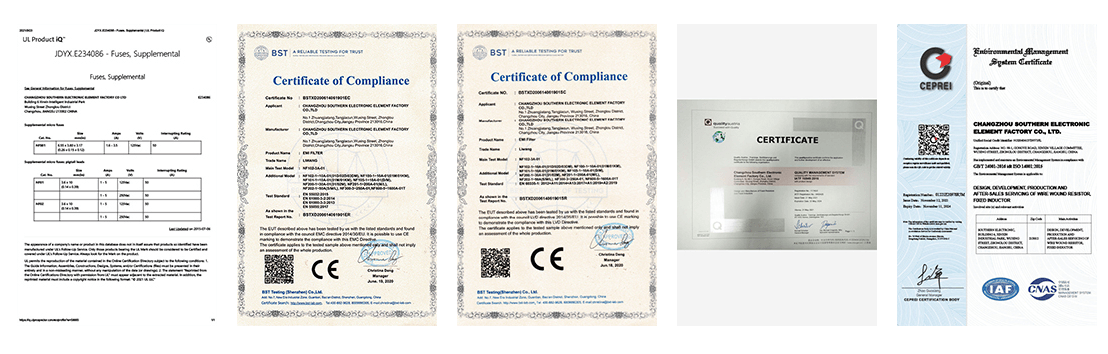
Watch for these common pitfalls when you review compliance documents:
Common Pitfall / Warning Sign | Why It Matters (Risk to EMS Buyer) |
|---|---|
Company name on certificate does not match the supplier quotation or invoice entity | The claimed UL compliance may belong to a different legal entity, meaning the actual supplier has no valid listing. |
Certificate address differs from the production site | The UL listing may not cover the factory actually manufacturing the product, invalidating compliance. |
Scope says 'trading' or 'sales' but not manufacturing or PCB-related work | The supplier is a middleman, not the certified manufacturer, so the UL file number does not apply to the goods being sourced. |
Expiry date has passed or surveillance status is unclear | A lapsed or unmonitored certificate means the product is no longer guaranteed to meet UL standards. |
Certificate image is low resolution, cropped, or missing a certificate number | Prevents independent verification and is a strong indicator of a forged or misrepresented document. |
Supplier refuses to provide registry or certification-body information | Blocks the buyer from confirming the claim through UL Product iQ or other official databases. |
A PDF attached to an email is not enough when your project faces compliance or customer-audit risk. Always verify through the official UL registry. Check the issuing body, the certificate scope, the production site, and the expiry date. These chokes protect your end product. Your due diligence protects your company.
RoHS Compliance Documentation
RoHS Directives Overview
You need to know the RoHS rules that apply to your common mode chokes. Directive 2011/65/EU bans dangerous substances in electronic parts. These substances include lead, mercury, cadmium, hexavalent chromium, and special flame retardants. Your common mode chokes must follow these limits to sell legally in Europe.
Common mode chokes also must survive your lead-free assembly process. Your supplier must make their chokes to handle the heat of lead-free reflow. Some parts have a valid exemption under the rules. You might see labels like:
RoHS Per Exemption Lead Free
RoHS Yes Per Exemption
The part number listed has an allowed exemption as defined in EU Directive 2011/65/EC and updates, 2002/525/EC.
These exemptions happen when a technical problem stops full compliance. You must check that the exemption fits your exact part number and use. The exemption code tells you which substance goes over the limit and why.
Validating Compliance Docs
You need good documents to prove RoHS status for every choke you buy. Start by asking for a RoHS test report from a certified lab like SGS or TUV. The report must cover the exact part number you plan to use. Do not accept a general statement for a whole product family without part-specific data.
You can check an SGS report through their online tool. SGS has a document check form on their website. You enter the report number, and SGS confirms it is real. TUV also offers independent testing based on the rules. Their testing proves the product meets requirements. This proof helps you meet legal rules. Both labs give you solid evidence that your supplier's claim is true.
Check your compliance papers against the test report. Look for any exemptions listed. Match the exemption code to the rules to make sure it is still valid. Your compliance papers must show the full chain of proof. Without this check, you risk using parts that break customer needs or legal rules. Every EMS operation depends on accurate records. Your careful work protects your company from blame and keeps your production line moving.
Lead Time Management for Common Mode Chokes
Lead time can make or break your production schedule. A delay in common mode chokes stops your whole project. Knowing what causes late deliveries helps you plan better.
Factors Affecting Lead Time
Raw material availability is the first factor. Ferrite cores and copper wire form the base of every choke. When these materials run low, your supplier cannot start production.
Production capacity matters too. A factory with few lines cannot handle big orders fast. Your order size also affects timing. Large orders might need more scheduling time.
Customization is the biggest time driver. Standard parts move quickly through production. Custom parts need extra engineering work. The difference shows in every stage of manufacturing:
Design Vector | Standard Off-the-Shelf Inductors | Custom Inductors |
|---|---|---|
Core Loss & Efficiency | Fixed core material; higher core losses at non-standard frequencies. | Custom material mix optimized for the target switching frequency. |
Thermal Dissipation | Generic pot/bobbin designs; prone to hot-spots at maximum RMS current. | Custom thermal potting, thermally enhanced bobbins, and higher-temperature insulation. |
EMI Filtering Performance | Broadband compromise; may require secondary filter stages. | Precision differential and common-mode tuning for exact noise peaks. |
Footprint & Packaging | Fixed pinouts and standard heights; may waste PCB space. | Custom pinouts, planar options, integrated headers, and low-profile housings. |
Supply Chain Risk | Vulnerable to distributor stockouts and sudden obsolescence. | Dedicated dual-shore supply pipeline with guaranteed lifetime availability. |
Customized chokes with complex winding needs require more advanced manufacturing steps. Multilayer winding, exact alignment, and heat control add time. Tight tolerances make steady quality harder to reach. This complexity raises the risk of performance differences. Those differences affect reliability and EMC compliance.
Strategies to Reduce Lead Time
You can control delivery schedules through smart action. Forecast demand early. Share your forecasts with your supplier. They can save materials and plan production lines around your needs.
Dual sourcing is another powerful tool. One case study on custom components with multiple suppliers showed real gains after 12 months. Average lead times dropped by 18%. Premium freight costs fell by 37%. Expected value at risk decreased by 75%. The net total cost of ownership rose only 0.4%. Upfront tooling investments paid back within eight months.
However, this approach has challenges. Qualification takes time. Suppliers may invest less unless you commit to volumes. If both sources share the same region, one disruption still hits both. Diversify across geographies when possible.
Regional diversification of manufacturing is important because lead time and component sourcing risks can affect OEM procurement decisions.
Triad Magnetics shows this approach. They run ISO 9001:2015 certified facilities in both the United States and the Philippines. This dual-region footprint ensures seamless supply continuity.
Choose standard parts whenever you can. A standard common mode choke uses ready stock. Custom parts need special materials and extra testing. Your production lead time shrinks right away when you pick catalog items.
Work with established manufacturers. Changzhou Southern Electronic Element Factory operates a 13,000 square meter facility with high annual capacity. Their scale supports faster turnaround for standard toroidal inductors. Their long history with clients like GE and PHILIPS proves dependable delivery.
Talk early with your supplier. Tell them your upcoming needs. Ask about their material stock. Confirm their current capacity. This open dialogue keeps your sourcing plan realistic. It also protects your EMC performance targets across every project.
Why Choose Southern Electronic Elements Factory as your
When you look at suppliers for chokes, the choice comes down to proven reliability. Changzhou Southern Electronic Element Factory Co., Ltd. gives EMS professionals what they need. With many certifications, a long history of serving top clients, and the capacity to meet your demands, this factory is a reliable option for authorized sourcing.
Comprehensive Certifications You Can Rely On
Quality certifications give you confidence before you place your first order. This factory holds ISO9001:2008 for quality management. It keeps ISO14000 for environmental management. IATF16949 covers automotive applications. UL recognition and RoHS compliance cover safety and substance limits. CE and CQC marks open more markets for you. These many certifications mean one supplier covers your compliance needs across different industries. This depth supports your authorized sourcing decisions with written proof.
Each certification goes through regular audits. ISO9001 requires ongoing surveillance. UL does periodic factory inspections. RoHS documentation comes from accredited labs. When you pick this supplier, you get compliance paperwork that holds up to customer audits. This lowers your risk during production and final certification.
Decades of Experience Serving Global Leaders
Experience matters for consistent batch quality. Started in 1989, this factory brings over three decades of expertise. Their 13,000 square meter facility supports high-volume production. Global clients like GE and PHILIPS trust this supplier. That track record proves the factory can deliver the consistency you need for your authorized sourcing plan.
The technical team builds customized solutions. Whether you need standard inductors or custom designs, the team works with you. Their high annual capacity means shorter lead times for standard parts. This mix of experience and scale makes this factory a strong choice for your choke needs.
When you pick this supplier, you get more than a component. You get a partner with verified certifications, proven quality, and the ability to meet your schedule. This supplier relationship protects your production line, lowers your compliance risk, and safeguards your end-product quality.
This common mode choke sourcing guide for EMS covers four important areas. Batch consistency protects your production yield and EMC performance. UL and RoHS compliance documents keep your products legal for global markets. Lead time management prevents unexpected line stops. A structured sourcing process delivers reliable chokes every time.
Follow this common mode choke sourcing guide for EMS when you check a supplier. Use this checklist:
Check characteristic impedance matching with TDR measurements.
Verify differential mode insertion loss at the signal frequency.
Confirm common mode insertion loss for the noise frequency range.
These checks protect your EMC targets, system reliability, and product quality. A careful review makes sure every common mode choke meets your design needs. This method makes sourcing decisions safer.
FAQ
How do I check batch consistency before placing a large order?
Ask for test data for each batch. Look at inductance, DCR, saturation current, and hi-pot results. Also ask for lot traceability records. A good supplier gives you this data right away. You can also check their ISO certification and client history. This step helps your production yield and lowers rework costs.
What is the difference between UL Listed and UL Recognized for common mode chokes?
UL Listed is for complete end products. UL Recognized is for parts that go inside other products. Common mode chokes are UL Recognized parts. The supplier gets a yellow card to prove this. Always check the file number in the UL Online Certifications Directory before buying.
How do I confirm a supplier's RoHS documentation is valid?
Ask for a RoHS test report from a certified lab like SGS or TUV. The report must cover your exact part number. Check for any exemptions and make sure they are still valid. You can check SGS reports through their online tool. This step keeps your sourcing safe and legal.
What factors cause long lead times for common mode chokes?
Raw material supply, factory capacity, order size, and customization affect lead times. Standard parts ship faster than custom ones. Predict your demand early and tell your supplier. Using two suppliers in different areas lowers risk. Big factories with a long history often ship standard toroidal inductors faster.
Can I use a standard common mode choke instead of a custom design?
Yes, if your design allows it. Standard chokes use stock parts and need no extra engineering. Your production lead time gets shorter right away. Custom parts need special materials and more testing. Pick catalog items when your EMC goals allow. This makes your sourcing easier.


Recommended Products

Common Mode Choke-SQ2418 (Horizontal Type)

Common Mode Choke for DC/DC Inverter (TCC-JG3113-1.3uH)

Common Mode Choke for DC/DC Inverter (TCC-JG3113-39uH)

Common Mode Choke-SQ3224 (Horizontal Type)

Common Mode Choke-SQ3224 (Vertical)

Common Mode Choke-SQ2820 (Vertical)

Common Mode Choke-SQ2418 (Vertical)

UU Type Common Mode Choke

Common Mode Choke-SQ1918 (Horizontal Type)

Common Mode Choke-SQ1918 (Vertical)


Recent News
1.Common Mode Chokes
2018-09-082.How Common Mode Chokes Work
2018-09-083.How many turns for common mode choke?
2024-12-114.What is the difference between common mode choke and differential mode choke?
2025-08-285.How Does it Work? Common Mode Chokes
2025-10-316.What are the best common mode chokes for EMI suppression?
2026-05-117.Common Mode Choke Sourcing Guide for EMS: Batch Consistency, UL, RoHS, and Lead Time
2026-09-21

