


What are the best common mode chokes for EMI suppression?
 May 11, 2026|
 View:268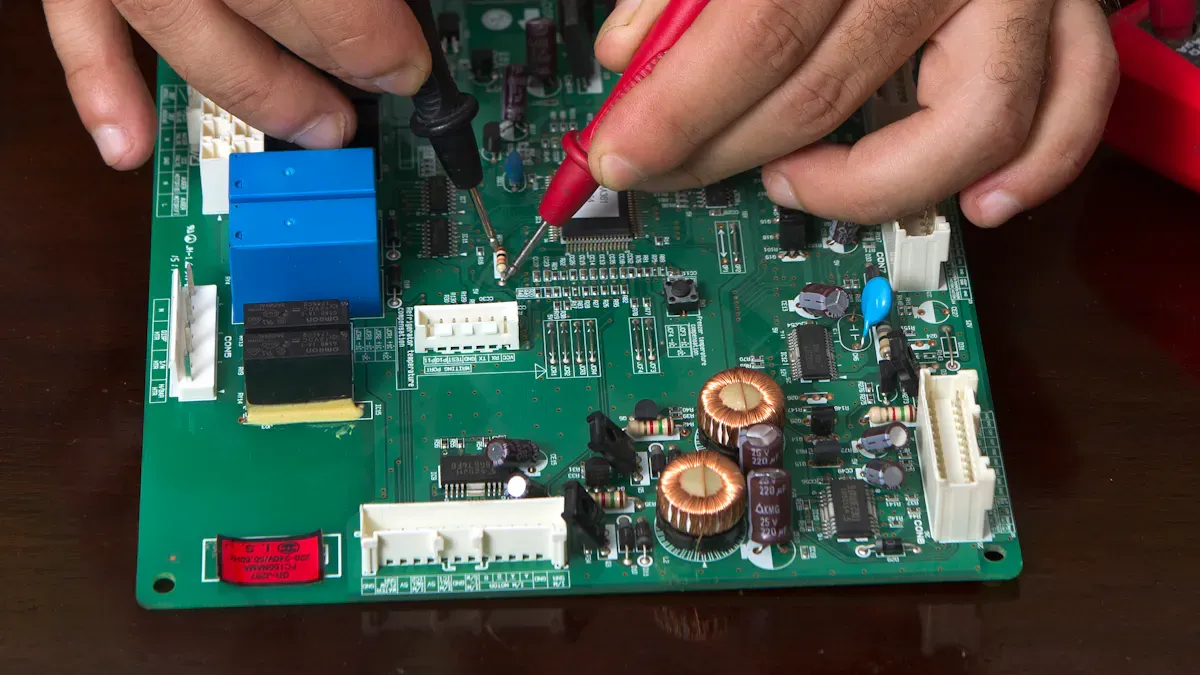
You can find the best common mode chokes for emi suppression in many new devices. Horizontal chokes are good for low designs like car electronics. Ferrite core chokes are popular because they block emi well and are not expensive. Companies like Changzhou Southern Electronic Element Factory Co., Ltd., Coilcraft, Murata, and Abracon make top products like SQ1010, SQ1212, and SQ1515. These chokes block emi and unwanted noise very well. You should pick the best common mode chokes for your needs and how well they work. Common mode chokes help devices work well and block emi in power supplies, car systems, and home electronics.
Horizontal chokes are good for flat screens and car electronics.
Ferrite cores help block emi and work better in factories.
Car makers use common mode chokes to block emi in electric cars.
Key Takeaways
Pick common mode chokes by looking at the frequency range. This helps block signals you do not want. - High impedance is important to stop noise. Low impedance lets good signals pass through. - Choose the best core material, like ferrite or powdered iron. This makes the choke work better. - Put chokes near where the noise starts. This helps stop EMI and lowers interference. - Test and check chokes often to make sure they work right. This also stops them from getting too hot.
Key Criteria for Best Common Mode Chokes
When you pick common mode chokes for EMI suppression, you need to think about a few important things. These things help you get the best choke for your device and make sure it works well.
Frequency Range
You should check what frequency range the choke can handle. Common mode chokes use inductance to stop signals you do not want. When the frequency goes up, the choke’s impedance also goes up. This helps block EMI better. If you know the interference frequency, you can choose the right choke. Ferrite cores with high permeability give better impedance over many frequencies.
Impedance and Performance
Impedance shows how well a common mode choke blocks noise. You want high impedance where the interference is strong. But the choke should have low impedance for signals you want to keep. The table below shows what changes impedance and performance:
Parameter | Description |
|---|---|
Common Mode Impedance | Higher values block more noise. |
Core Material | Changes how well the choke works. |
Number of Turns | More turns usually mean higher impedance. |
Self-Resonant Frequency | Shows how well the choke works at some frequencies. |
Current and Voltage Ratings
You must check if the choke can handle the current and voltage in your circuit. If the current is too high, the choke can get too hot or stop working well. Ferrite or nanocrystalline cores with high permeability help the choke work well, even if the current jumps. Always look at the current rating and pick a choke with low dcr to save energy.
Size and Form Factor
The size of the choke is important for your design. Big chokes are better for blocking low-frequency noise in large machines. Small chokes fit in small devices. Make sure the choke’s size fits your board and that it has low dcr for good performance.
Core Material
The core material changes how well the choke works. Ferrite cores have high magnetic permeability and work for many frequencies. Powdered iron cores can handle high currents and stay stable when it gets hot. Silicon steel cores are good for low-frequency jobs. Picking the right core material helps the choke work better and block noise well.
Tip: Always pick a choke that matches what your system needs for the best results.
Types of Common Mode Chokes for EMI Suppression
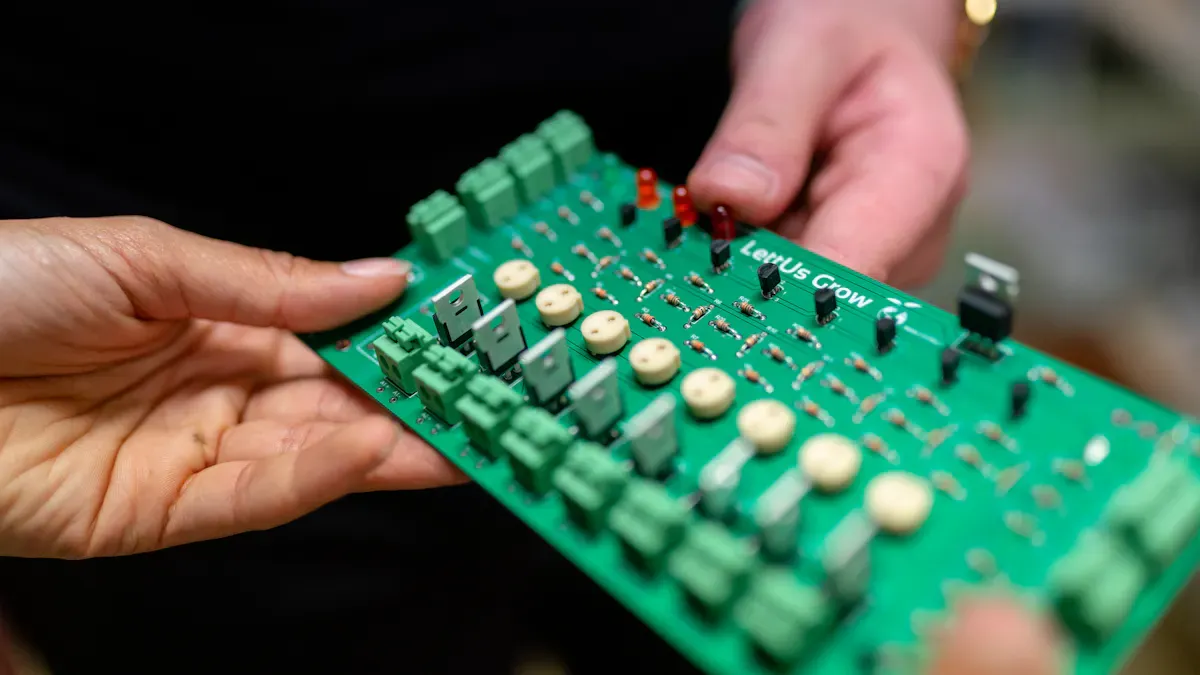
When you want to stop EMI, you can pick from different common mode chokes. Each kind works best in its own way. It is important to know how each one helps your circuit.
Ferrite Bead Chokes
Ferrite bead chokes are tiny and simple to use. You see them a lot in things like TVs and phones. They block high-frequency noise and do not need tuning. You can add them later if you find noise problems.
Advantages | Limitations |
|---|---|
Cheap (often less than $0.10 each) | Not much control over the stopband shape |
Very small size (0402–0805 SMD packages are common) | Impedance drops a lot when current is high |
Easy to add late in the design | Lower impedance when there is a lot of current |
Block high-frequency noise without hard math in easy cases | Can make unwanted resonance with bypass capacitors if the frequency is wrong |
No tuning needed for basic filtering | Resonant peaking can cause 10 dB gain if LC resonance is below crossover frequency |
N/A | Not good for noise below a few hundred kHz, so they do not work well for low-frequency mains noise or big common-mode problems. |
Tip: Use ferrite bead chokes for high-frequency noise in small gadgets.
Toroidal Chokes
Toroidal chokes have a ring-shaped core. They give strong magnetic coupling and do not leak much electromagnetic energy. These chokes are good for power supplies and audio gear. You can use them to block both high and low-frequency noise.
SMD Chokes
SMD chokes are great for small devices. They save space on your board and still block noise well. These chokes work in DC-DC converters, power supplies, and wireless gadgets.
They cut down noise well.
Their small size saves space on the board.
They work well at high frequencies.
They keep circuits safe from voltage spikes.
Data moves better.
You see SMD chokes in cell phones, wireless tools, and computer storage.
Wire-Wound Chokes
Wire-wound chokes have wire wrapped around a core. They give high inductance for common-mode signals. These chokes let your main signals go through with little loss. In high-frequency circuits, they block noise but keep your signals clear.
The magnetic flux adds up for common-mode currents, so inductance goes up.
The flux cancels out for differential-mode currents, so your signals pass through.
Split-Core Chokes
Split-core chokes open up so you can snap them around cables without taking anything apart. You use them for quick fixes or when you need to add EMI blocking after building your device. These chokes help in test setups and repairs.
Note: All chokes make high impedance for noise and low impedance for your main signals. Pick the type that fits your space, frequency, and current needs.
Top Products and Brands for EMI Suppression
If you want to block EMI, you should know the best brands. Each company has special features and models. You can look at them and pick what works for you.
Changzhou Southern Electronic Element Factory Co., Ltd.
Changzhou Southern Electronic Element Factory Co., Ltd. makes good common mode chokes. They have made parts since 1989. Their chokes are used in cars, phones, and other electronics.
Some popular models are:
SQ1010: This choke stands up. It works with AC/DC 250V. It can handle high insulation voltage. You can use it in places from -25°C to +125°C.
SQ1212: This model is for circuits that need more power. It blocks EMI well and has low resistance.
SQ1515: This choke is strong for big jobs. It handles high current and keeps your system working well.
These chokes give high inductance and low resistance. This blocks noise but keeps your signals strong. The company makes over 200 million chokes each year. They use new technology and check quality carefully.
Tip: Use these chokes if you need good EMI blocking in power lines, cars, or home electronics.
Coilcraft
Coilcraft is a famous brand for chokes. You see their chokes in power supplies and data lines. Coilcraft has many chokes for surface mount and through-hole designs.
You can pick chokes for low or high current.
Their chokes work in small and big devices.
Coilcraft chokes have strong cores to block EMI at many frequencies.
Coilcraft chokes are easy to put in. Many engineers use them in factories and homes. You can trust their performance and strength.
Murata
Murata is a top brand for chokes. You see their chokes in phones and cars. Murata makes many models for EMI blocking.
You can use Murata chokes in fast data lines.
These chokes keep your signal clear and block noise.
Murata chokes work in small gadgets and big machines.
Murata makes chokes for differential transmission lines. This means less noise and better data flow. You find their chokes in phones, computers, and cars.
Here are some facts about Murata chokes:
Many models fit different jobs.
You can use them in homes and cars.
They help keep signals clear and strong.
Abracon
Abracon is another good brand for chokes. You can use their chokes in many devices. Abracon has standard and custom chokes for EMI blocking.
You can find chokes for power lines and data lines.
Abracon chokes are known for steady performance.
You get many sizes and shapes.
You see Abracon chokes in machines, computers, and networks. Their chokes help you follow strict EMI rules.
Note: Always check the specs to make sure the choke fits your circuit.
Market Share Table
You might want to know how brands compare. Here is a table showing market share:
Brand | Market Share |
|---|---|
Panasonic | 14% |
TDK Electronics | 12% |
The choke market has many strong brands. Changzhou Southern Electronic Element Factory Co., Ltd., Coilcraft, Murata, and Abracon are important too. Look at product features and reputation when you pick a choke.
Comparing the Brands
Each brand gives you different benefits:
Changzhou Southern Electronic Element Factory Co., Ltd. handles high current and blocks EMI well.
Coilcraft has many choices and is easy to use.
Murata focuses on signal quality and noise blocking in data lines.
Abracon gives steady performance and many sizes and shapes.
Pick the choke that fits your device, current, and frequency needs. Always check the specs and ask for help if you need it.
Application-Specific EMI Suppression
Power Lines
You must control EMI in power lines to keep devices safe. Power supplies make noise that travels through wires and causes problems. To pick the right common mode choke for power lines, you should:
Figure out how much noise you want to block.
Find the lowest frequency of noise you need to stop.
Make sure the choke can handle the current in your system.
Big chokes work better for low-frequency noise. You can use through-hole wire coils or surface-mount chokes for AC line noise. These chokes help keep power steady and protect your equipment.
Tip: Use chokes with high current ratings and low parasitic capacitance for the best results in power supply systems.
Data Lines
Data lines, like Ethernet cables, need clean signals. Common mode chokes block unwanted noise and keep your data clear. You see these chokes in USB, HDMI, and other fast data lines. They use special coil designs to cancel interference and keep signals strong.
Use chokes to keep data accurate.
Pick low-loss chokes for the best signal quality.
USB and HDMI
USB and HDMI ports move data very fast. They can pick up interference from other electronics. Common mode chokes give high impedance to noise and stop it from reaching your devices. They let your main signals pass without trouble. This keeps video and audio clear.
Note: Always use chokes that match the speed and needs of your USB or HDMI system.
Automotive Systems
Cars have many electronic systems that must work without errors. Motors, sensors, and control units can all make interference. You need chokes that handle high currents and work at many frequencies. Ferrite cores and bifilar winding help block noise in tough environments.
Specification | Description |
|---|---|
Core Material | Ferrite for high magnetic permeability and low losses |
Winding Configuration | Bifilar winding for balanced inductance |
Inductance Value | High, but matched to avoid signal distortion |
Current Rating | Must handle the highest expected current |
Parasitic Capacitance | Keep low for good high-frequency performance |
In electric vehicles, common mode chokes protect charging systems and control modules from interference. This makes sure everything works smoothly.
Industrial Equipment
Factories use machines that need strong EMI control. Power panels and motor drives can make lots of noise. You can use common mode chokes in these systems to keep machines running without problems. For example, adding chokes to variable frequency drives stops electrical noise from affecting other devices.
Use chokes in power panels and motor controls.
Keep your equipment reliable and safe.
Remember: Each application needs a choke with the right size, current rating, and frequency range to block interference and keep your system working well.
Installation Tips for Common Mode Chokes
Placement and Orientation
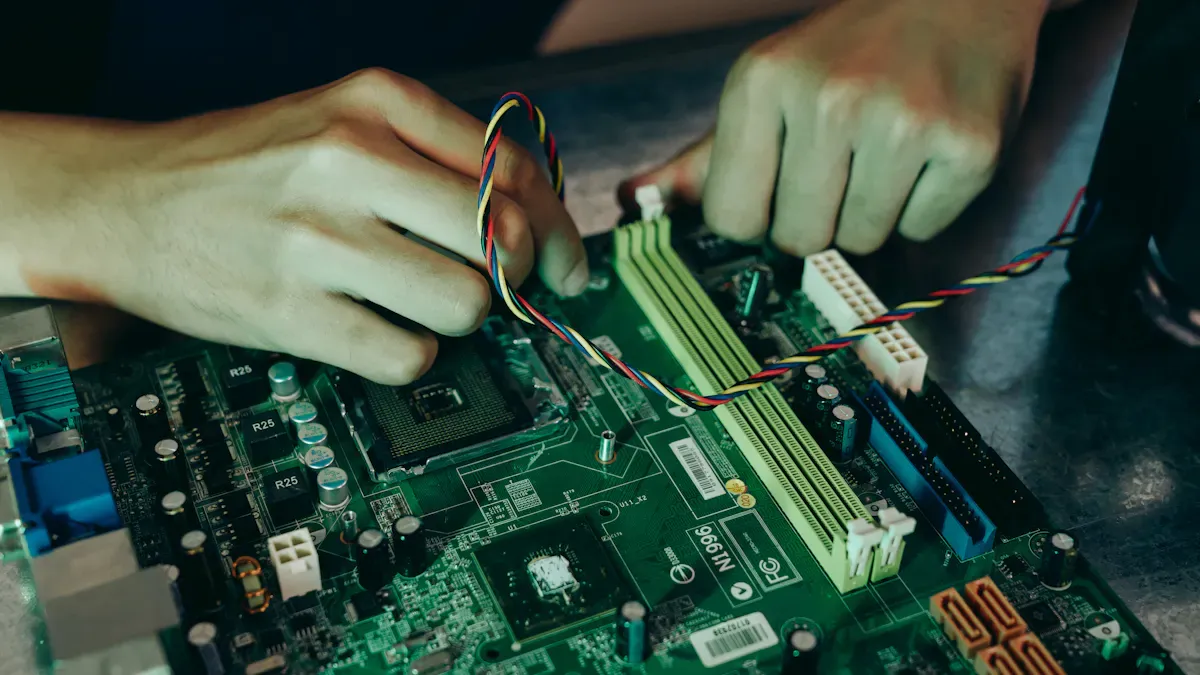
You get the best EMI suppression when you put common mode chokes in the right place. Put the choke very close to where the noise starts. This stops noise before it spreads in your circuit. Keep the cable or PCB trace between the choke and noise source as short as you can. Shorter traces pick up less noise.
When you put a choke on a PCB, make the traces go in a way that keeps the loop area small. Small loops mean less noise can get into your signals. Try to keep signal traces away from power traces. This helps cut down on interference.
Tip: Put the choke near connectors or places where noise can get in or out of your device.
Avoiding Mistakes
You can stop many mistakes if you do a few easy checks:
Do not put the choke far from where the noise starts. Long traces can act like antennas and bring in more noise.
Do not run signal and power traces together under the choke. This can let noise jump from one trace to another.
Do not forget about heat. High current can make the choke hot. Make sure there is enough air or cooling around the choke so it works well.
Do not use a choke with the wrong current or voltage rating. Always check the specs before you put it in.
Mistake | Why It Matters |
|---|---|
Choke too far away | More noise can get into the circuit |
Poor trace routing | Makes more noise get into signals |
Overheating | Makes the choke work worse |
Wrong rating | Can break or not block noise enough |
Maintenance and Testing
You should check your common mode chokes sometimes. Look for signs of overheating, like color changes or a burnt smell. Test the choke’s impedance with a meter if you hear more noise in your system. Change any chokes that look damaged or do not work as they should.
Regular checks help you find problems early and keep your EMI suppression strong. ️
You can pick from many common mode chokes to block EMI. Some good brands are Changzhou Southern Electronic Element Factory Co., Ltd., Coilcraft, Murata, and Abracon. These companies make products you can trust. Choose a choke that fits your current, inductance, and size needs. Put the choke close to where the noise starts for the best effect. Test for EMI early and watch for heat to keep things safe. If you need help, ask the company or an expert. They can help you and show you the right choice.
FAQ
What does a common mode choke do?
You use a common mode choke to block unwanted noise in your circuits. It lets your main signals pass but stops interference. This helps your devices work better and keeps signals clean.
How do I choose the right common mode choke?
You should check the current, voltage, and frequency needs of your device. Pick a choke that matches these needs. Look at the size and core material to make sure it fits your design.
Where should I place a common mode choke?
You get the best results when you put the choke close to the noise source. Place it near connectors or entry points. Short traces help stop noise from spreading.
Can a common mode choke reduce electromagnetic interference?
Yes, a common mode choke helps reduce electromagnetic interference. It blocks unwanted signals and keeps your device safe from noise. You see better performance and fewer problems.
Do I need to test my common mode choke after installation?
You should test your choke after you install it. Check for heat, damage, or noise. Regular testing helps you find problems early and keeps your system working well.


