


Types of Resistor including Carbon, Film & Composition
 Mar 23, 2026|
 View:315
When you learn about electronics, you see many types of resistor. Some examples are carbon, film resistor, and composition resistors. These resistors are important in things like phones, computers, and cars. Picking the right resistor helps your circuits stay safe and work well. For example, carbon composition or film resistors are good for most circuits. Metal film and wire wound resistors are better for jobs that need more accuracy. If you know the differences, you can make better and stronger electronic systems.
Key Takeaways
Learn about the main types of resistors. These are carbon composition, carbon film, metal film, wire wound, and ceramic composition. Each type is used for different jobs in electronics.
Pick the right resistor for your project. If you need high accuracy, use metal film resistors. If you just need a basic resistor, carbon film resistors work well.
Think about the environment when you pick resistors. Some resistors can handle heat and moisture better. These are good for tough places.
Look at the power rating of resistors. Always pick a resistor that can handle at least double the power your circuit needs. This keeps your project safe and helps it last longer.
Use the color bands on resistors to find out their value and tolerance. This helps you choose the right resistor for your electronic projects.
Main Types of Resistors
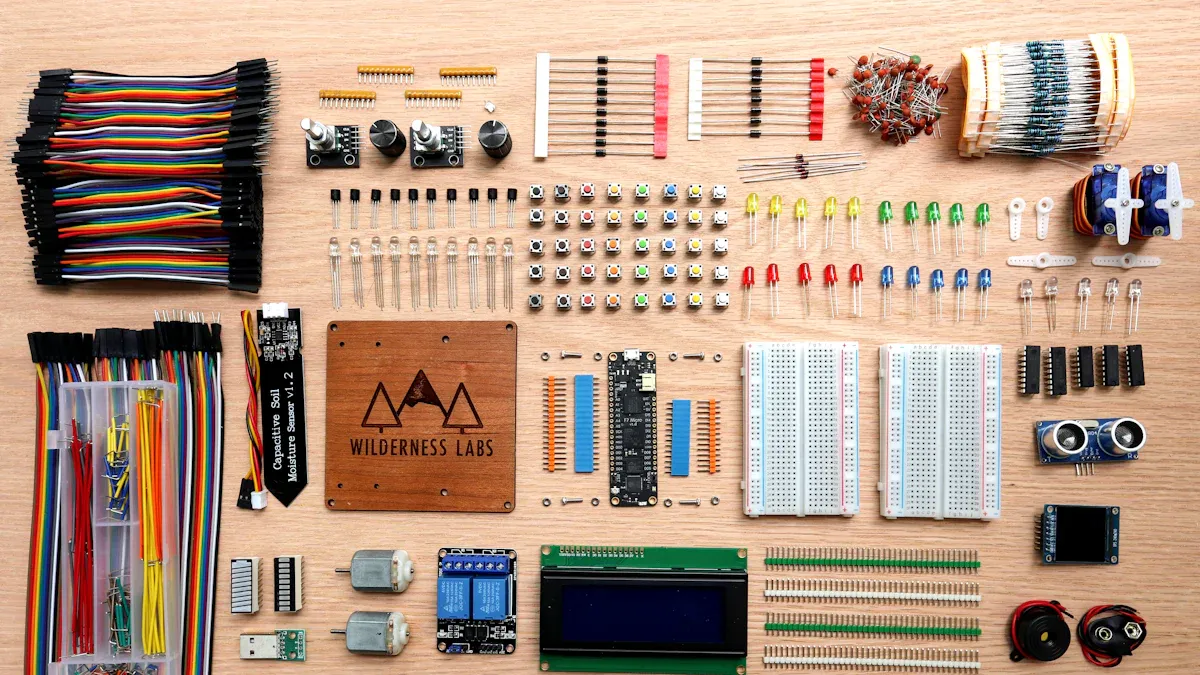
There are many resistor types in electronics. Each type is built differently and has special features. You need to know these differences to pick the right resistor. Changzhou Southern Electronic Element Factory Co., Ltd. makes many resistors for cars and high-power jobs. Their products include fixed resistors and variable resistors.
Carbon Composition Resistors
Carbon composition resistors are very old. They are used in circuits that need to handle strong energy pulses. These resistors are made from carbon particles mixed with ceramic binder. Changing the mix changes the resistance value. The resistive part is shaped into rods, cut to size, and leads are put on the ends. The rods are heated and covered with epoxy or polyester resin.
Feature/Characteristic | Description |
|---|---|
Resistive Material | Conductive carbon particles mixed with ceramic binder |
Resistance Adjustment Factors | Carbon to ceramic ratio, diameter, and length of resistive element |
Construction Process | Rods formed, cut to length, leads embedded, fired, encapsulated in resin |
Protective Covering | Plastic molding (epoxy and polyester based resin) |
Testing | Tested twice to ensure value integrity |
Carbon composition resistors are used in power control circuits, surge protection, and welding control circuits. They work well in high voltage power supplies and current-limiting circuits.
Carbon Film Resistors
Carbon film resistors are common in electronics. They are used for general purposes. The process starts with a ceramic rod. A carbon-graphite layer is put on the rod. Spiral grooves are cut into the film to set resistance. Metal caps and soldered leads are added.
Pick a ceramic rod for insulation.
Put a carbon-graphite layer on the rod.
Cut spiral grooves in the film to set resistance.
Add metal caps and solder leads.
Carbon-film resistors are found in computers, test equipment, and DC power supplies. Epoxy resin protects them from heat and damage.
Metal Film Resistors
Metal-film resistors are used when you need high accuracy. They use alloy films like nickel-chromium or tin-palladium. Magnetron sputtering makes the films even. These resistors have tight resistance tolerance and stay stable for a long time.
Feature | Metal Film Resistors | Carbon Film Resistors |
|---|---|---|
Material | Alloys (nickel-chromium, tin-palladium) | Carbon-based films |
Manufacturing Precision | Magnetron sputtering for uniform films | Mechanical grooving |
Resistance Tolerance | ±1% to ±0.01% | ±5% to ±20% |
Long-term Stability | Drift <1% | Drift >5% after five years |
Thermal Conductivity | Superior due to alloy films | Limited |
Inductive Effects | Compensated through groove profiles | Minimal due to structure |
Metal-film resistors are used in amplifiers, measurement devices, and high-accuracy tools. They are also found in bridge circuits, RC oscillators, and active filters. Thin film resistors are similar and used in precision circuits.
Wire-Wound Resistors
Wire wound resistors are made by wrapping wire around a ceramic or fiberglass core. Nickel-chromium or tungsten wire is used. This design lets the resistor handle lots of power and stay stable. Wirewound resistors are used in high-power and high-precision jobs.
Manufacturing Process | Advantages |
|---|---|
Wire wound resistors are made by winding a conductive wire around a non-conductive core. | High power dissipation, excellent stability, can handle high temperatures, suitable for high-precision and high-power applications |
Wire wound resistors are not made as chips because they are big. They are used in power supplies and industrial machines.
Ceramic Composition Resistors
Ceramic composition resistors use a solid cylinder made from carbon or graphite powder mixed with ceramic clay. The carbon powder helps conduct electricity. The resistive part is covered in plastic to protect it from heat. Copper leads are attached at both ends.
Ceramic composition resistors work safely at high temperatures and handle lots of energy. They are used where heat and energy are high. These resistors are bigger for their power rating than other types.
Tip: Choose composition resistors for circuits that need to handle high temperatures and energy surges.
You see fixed and variable resistors in many electronics. Each resistor type has special jobs in a circuit. Changzhou Southern Electronic Element Factory Co., Ltd. offers many resistor types, including carbon composition, carbon film, metal-film, wire wound, and ceramic composition resistors. You can pick the right resistor for cars, factories, or general electronics projects.
Construction and Characteristics
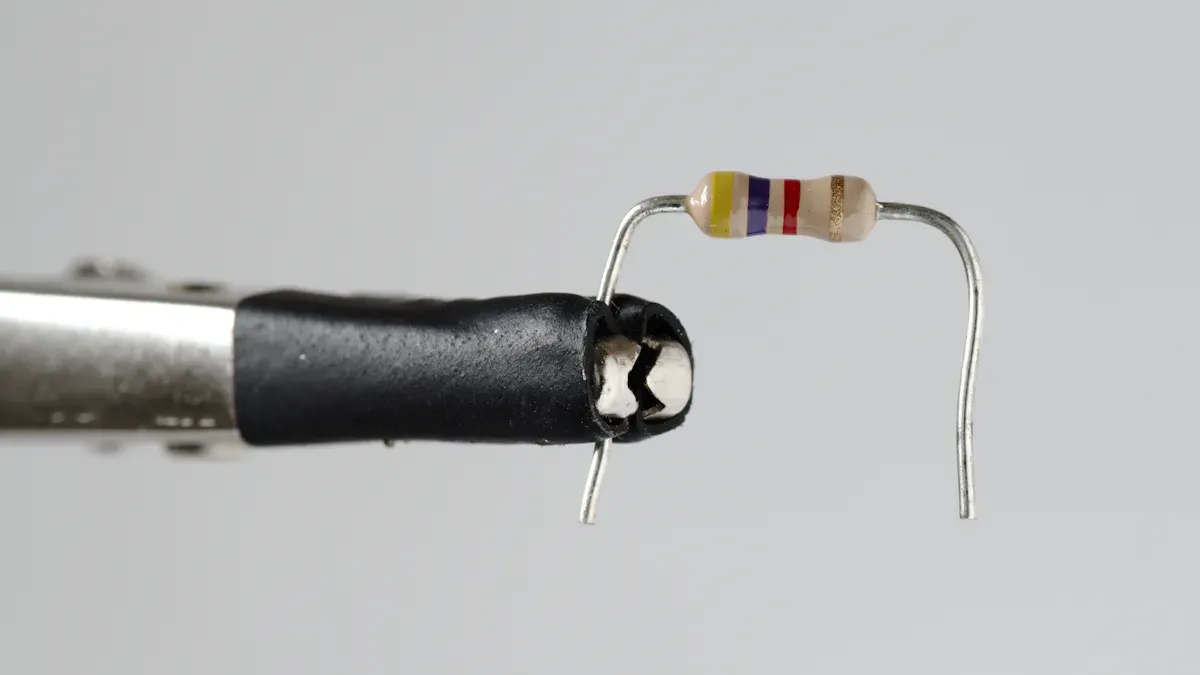
How Resistors Are Made
There are many resistor types. Each type is built in its own way. The table shows how the inside and materials are different:
Resistor Type | Internal Structure and Materials |
|---|---|
Composition | Small size, low price, good for high frequencies; resistance from 1 Ω to 22 MΩ; can get old and change. |
Carbon-Film | Thin carbon layer on ceramic; resistance set by film thickness; coating keeps out water; sealed tightly. |
Metal-Film | Like carbon-film but uses metal or metal alloy; can have lower temperature changes. |
Wirewound | Metal wire wrapped around ceramic core; covered with ceramic paste for insulation and heat. |
Carbon and film resistors use different stuff and designs. Carbon types use carbon mixed with binder. Film types use a thin layer on a ceramic rod. Wirewound resistors use metal wire wrapped around a core.
Electrical Properties and Tolerance
How a resistor is made changes how it works. Metal film resistors are very accurate and make little noise. Carbon film resistors make more noise and can change over time. The table shows common tolerance ranges:
Resistor Type | Tolerance Range |
|---|---|
Carbon film | 2% |
Carbon composition | 5% to 20% |
Metal film | 0.1% to 1% |
Use tight tolerance resistors for jobs needing precision.
For most circuits, ±5% tolerance is fine.
If you want steady voltage or current, pick ±1% or better.
Note: Metal film resistors change less than 1% in five years. Carbon film resistors can change more than 5%.
Durability and Environmental Resistance
Resistors need to last, especially in tough places. Metal film resistors work well in sensors and last over 10 years. Thick film resistors have strong coating and handle surges. Wirewound resistors use ceramic insulation and work in high-power jobs. Chip resistors are small and sealed, good for car electronics.
Resistor Type | Typical Application | Key Durability Features | Lifespan (Estimated) |
|---|---|---|---|
Metal Film | Sensor Circuits, ECUs | ±1% tolerance, resists vibration | 10+ years |
Thick Film | Power Supplies, Lighting | Handles surges, resists moisture | 8–10 years |
Wirewound | Starters, Heaters | High power, ceramic insulation | 7–9 years |
Chip (SMD) | Infotainment, ADAS | Small, sealed for tough conditions | 10+ years |
Pick the right resistor for where you use it. Some resistors handle heat, shaking, and water better than others.
Advantages and Disadvantages of Resistor Types
Pros and Cons of Carbon Composition Resistors
Carbon composition resistors are good for circuits with strong energy pulses. They have some important benefits. - They can take in a lot of energy from pulses. - They have low inductance, so they work well in fast circuits. - Their solid shape helps them handle energy better. But there are also some problems. - Their resistance can change by up to 10% after long use. - They react to water and heat changes. - They are not steady if you need high resistance. - They get old and may not work the same over time. You see these resistors in power control and surge protection. They cost less than other types. But they are not good for jobs that need exact numbers.
Pros and Cons of Carbon Film Resistors
Carbon film resistors are used in many devices. They are good for most jobs. - They are small and do not cost much. - They work well with different frequencies. - They come in many resistance values. But there are things to watch out for. - They can get old and their value can change. - They have bigger voltage and temperature changes. - It is hard to find ones with less than 5% tolerance. People use carbon film resistors in fixed and variable resistors for daily electronics.
Pros and Cons of Metal Film and Wire-Wound Resistors
Metal film resistors are very accurate and make little noise. You use them when you need steady and exact resistance. They are good for high-frequency circuits. Wire wound resistors can handle a lot of power and stay steady under heavy loads. You see them in heaters and power supplies.
Type | Main Advantage | Main Limitation |
|---|---|---|
Metal Film | High precision | Higher cost |
Wirewound | High power handling | Larger size |
Tip: Pick metal film for exact jobs and wirewound for high-power needs.
Comparison with Other Types
You should pick the right resistor for your project. The table shows where each type is used.
Resistor Type | Application Use Case |
|---|---|
Wire wound resistors | High-Power Applications |
Metal film | High-Frequency Applications |
Carbon film | General Purpose |
If you need a resistor for lots of energy or pulse circuits, use composition resistors. For jobs that need accuracy, pick metal film. For most uses, carbon film is a good choice. Both fixed and variable resistors use these types, so you can find what you need.
Applications and Selection Guide
Where to Use Each Resistor Type
You find many types of resistor in electronics and cars. Each type works best in certain places. The table shows where you can use different resistors:
Resistor Type | Common Applications in Electronics and Automotive Industries |
|---|---|
Fixed resistors | Used on circuit boards, in TVs, and amplifiers. |
Carbon composition resistors | Used in circuits that handle strong energy pulses, like power control and surge protection. |
Wire wound resistors | Good for high power jobs and stay steady at high heat. |
Thin film resistors | Used in medical tools and audio gear needing high precision. |
Thick film resistors | Common in battery devices and lighting systems. |
Variable resistors | Used in audio and video gear to control voltage or sound. |
Potentiometers | Found in radios and sensors for adjusting signals. |
Thermistors | Used in cars and appliances to check temperature. |
Surface mount resistors | Used in computers and modern tech products. |
Linear resistors, like carbon film and metal film resistors, are used in most circuits. Non-linear resistors, such as thermistors and varistors, help protect against voltage spikes or measure temperature.
Tip: Pick composition resistors for circuits with high energy surges or high heat.
Choosing the Right Resistor for Your Project
When you pick a resistor, think about your project, where it will be used, and how much power it needs. Here are some steps to help you choose:
Check the Power Rating: Make sure the resistor can handle more power than your circuit uses. This keeps your project safe.
Look at Tolerance and Precision: For exact values, use metal film or thin film resistors. For most jobs, carbon film resistors are fine.
Think About Size and Packaging: If your project is small, use surface mount or chip resistors.
Consider Environmental Conditions: If your circuit faces heat, moisture, or shaking, pick resistors with strong coatings or ceramic bodies.
Decide Between Linear and Non-linear Resistors: Use linear resistors for steady resistance. Use non-linear resistors, like thermistors, for sensing temperature or surge protection.
Variable resistors are used when you need to change voltage or current, like in volume controls or sensor settings. In cars and factories, wire wound and composition resistors are good for high power and tough jobs.
Note: Always pick a resistor with a power rating at least twice what your circuit needs. This helps your project last longer.
If you know the types of resistor and where to use them, you can build circuits that are safe, reliable, and work well.
You can spot differences between carbon, film, and composition resistors. Carbon film resistors are cheap and good for simple jobs. Metal film resistors are very accurate and make little noise. They are great for sensitive circuits. Composition resistors cost less and work for basic projects. But they can make noise when hot.
Resistor Type | Best Use Case | Key Feature |
|---|---|---|
Carbon Film | Everyday electronics | Affordable, easy to use |
Metal Film | Precision circuits | Stable, low noise |
Composition | Cost-focused projects | Cheap, simple construction |
Pick a resistor that fits your project. Use metal film if you need accuracy. Choose carbon film to save money. Use composition for simple tasks. If you want reliable parts, contact Changzhou Southern Electronic Element Factory Co., Ltd. They have good products for many uses.
FAQ
What is the main difference between carbon film and metal film resistors?
Metal film resistors are more accurate. They make less noise. Carbon film resistors cost less. They are good for simple circuits.
How do I know which resistor type to choose for my project?
Check your circuit’s power, accuracy, and size. Use metal film for high precision. Pick carbon film for general jobs. Choose composition or wire wound for high energy.
Can I use any resistor in automotive electronics?
No, you cannot use any resistor. You need resistors that handle heat and vibration. They must also handle power surges. Wire wound, thick film, or ceramic composition resistors work best.
Why do resistors have color bands?
Resistors have color bands to show their value. The bands tell you the resistance and tolerance. You can read them to pick the right resistor.


