


High Frequency Transformer: Working Principle and Design
 Jul 21, 2025|
 View:1575
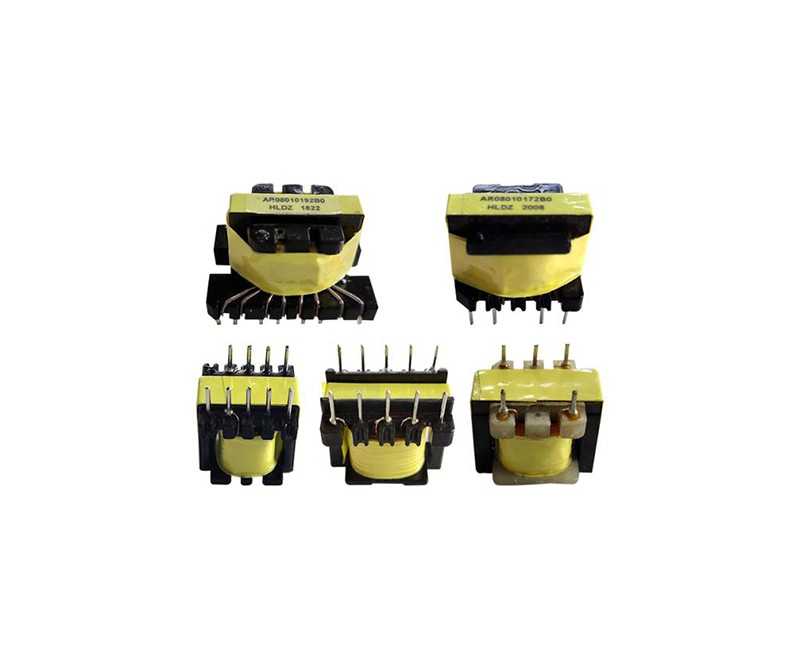
Transformers are the ubiquitous workhorses of electrical power conversion and isolation, present in everything from phone chargers to massive grid substations. Traditionally operating at power frequencies (50/60 Hz), a critical shift towards High Frequency Transformers (HFTs) operating in the kHz to MHz range is revolutionizing power electronics. This move unlocks significant advantages in size, weight, and efficiency, enabling the compact, high-performance devices demanded by modern technology.
Shrinking the Core: The Basic Premise
The fundamental physical size of a transformer is inversely proportional to its operating frequency. Faraday's Law (V = -N * dΦ/dt) shows that to induce a given voltage (V), you can either increase the number of turns (N) or increase the rate of change of magnetic flux (dΦ/dt), which is proportional to frequency. By drastically increasing frequency, HFTs achieve the same voltage transformation with far fewer turns and a much smaller magnetic core. This leads to dramatic reductions in transformer volume and weight – often by factors of 10 or more compared to equivalent low-frequency counterparts.
Key Advantages Driving Adoption
Size and Weight Reduction: As mentioned, this is the most immediate benefit. Compact HFTs are essential for applications like consumer electronics (laptop adapters, phone chargers), electric vehicles (on-board chargers, DC-DC converters), aerospace systems, and densely packed data center power supplies (e.g., advanced 48V server architectures like Tesla's).
Increased Power Density: HFTs allow much more power to be processed within a given volume, a critical metric for modern power systems constrained by space.
Enhanced Efficiency: Operating at higher frequencies opens the door to using faster, more efficient semiconductor switches like MOSFETs and GaN/SiC devices. While core losses generally increase with frequency, careful design, advanced materials, and optimized topologies (like resonant converters) can minimize overall losses, leading to potentially higher system-wide efficiency compared to bulky 50/60 Hz solutions.
Faster Dynamic Response: HFTs respond more quickly to load changes due to their smaller energy storage components (smaller core, less inductance/capacitance), making them ideal for tightly regulated power supplies requiring fast adjustments.
Navigating the High-Frequency Challenges
Operating at elevated frequencies introduces unique challenges that require careful engineering:
Core Losses: Ferromagnetic materials experience hysteresis and eddy current losses that increase significantly with frequency. Mitigation involves using specialized low-loss core materials:
Ferrites: The dominant choice (MnZn, NiZn), offering good high-frequency performance and resistivity but limited saturation flux density.
Powdered Iron/Composite Materials: Good for moderate frequencies with higher saturation but lower permeability.
Amorphous and Nanocrystalline Alloys: Offer extremely low core losses and higher saturation than ferrites, though often at a higher cost and machining difficulty.
Winding Losses (AC Effects):
Skin Effect: Current crowds towards the conductor surface at high frequencies, increasing effective resistance. Solution: Use Litz wire (many thin, insulated strands twisted together) to increase surface area.
Proximity Effect: Magnetic fields from adjacent conductors force current into specific patterns within a wire or neighboring wires, further increasing AC resistance. Careful winding techniques (interleaving, transposition) and Litz wire help mitigate this.
Electromagnetic Interference (EMI): Fast switching currents (
di/dt) and voltages (dv/dt) inherent to HFTs generate significant high-frequency noise. Rigorous EMI filtering, shielding, and precise circuit layout are essential for compliance.Thermal Management: Despite overall efficiency gains, power losses are concentrated in a smaller volume. Effective thermal design using thermally conductive materials, strategic heat sinking, forced air/liquid cooling, and sometimes integrated thermal management within the core/windings is critical for reliability.
Enabling Modern Technologies
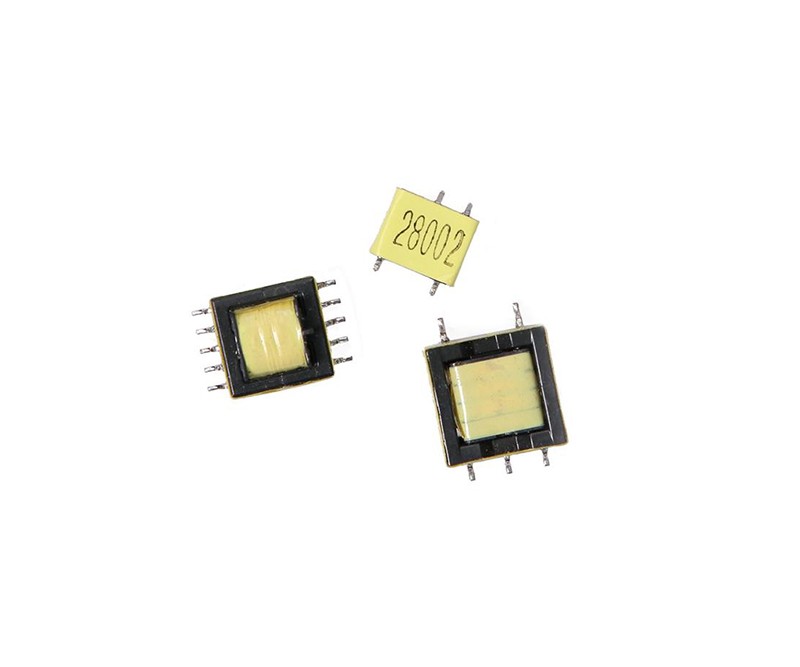
High-frequency transformers are fundamental enablers across diverse sectors:
Switched-Mode Power Supplies (SMPS): Virtually all modern, compact AC-DC and DC-DC converters rely on HFTs (operating from tens of kHz to >1 MHz).
Renewable Energy: Inverters for solar and wind power convert DC to grid-frequency AC using high-frequency intermediate stages with HFTs for isolation and voltage step-up/step-down.
Electric Vehicles (EVs): On-board chargers (OBCs) convert AC grid power to high-voltage DC for the battery using HFTs. Traction inverters (DC to AC for the motor) and complex multi-voltage DC-DC converters (e.g., HV to 48V/12V) within the car depend heavily on HFTs for size and efficiency.
Consumer Electronics: Every wall wart, laptop adapter, and phone fast charger employs a tiny HFT.
Telecommunications & Datacenters: Power delivery networks, particularly 48V-based systems driving server motherboards and GPUs, use sophisticated multi-phase DC-DC converters packed with HFTs.
Induction Heating and Welding: High power HFTs provide the isolated, controllable high-frequency current for these industrial processes.
Aerospace & Defense: Where power density and weight are paramount, HFTs power critical avionics, radar, and electronic warfare systems.
Optimization and the Future
Designing HFTs is a multi-variable optimization problem balancing frequency, core material, winding strategy, thermal management, and cost. Advanced techniques include:
Multi-objective Optimization Algorithms: Automating design trade-offs.
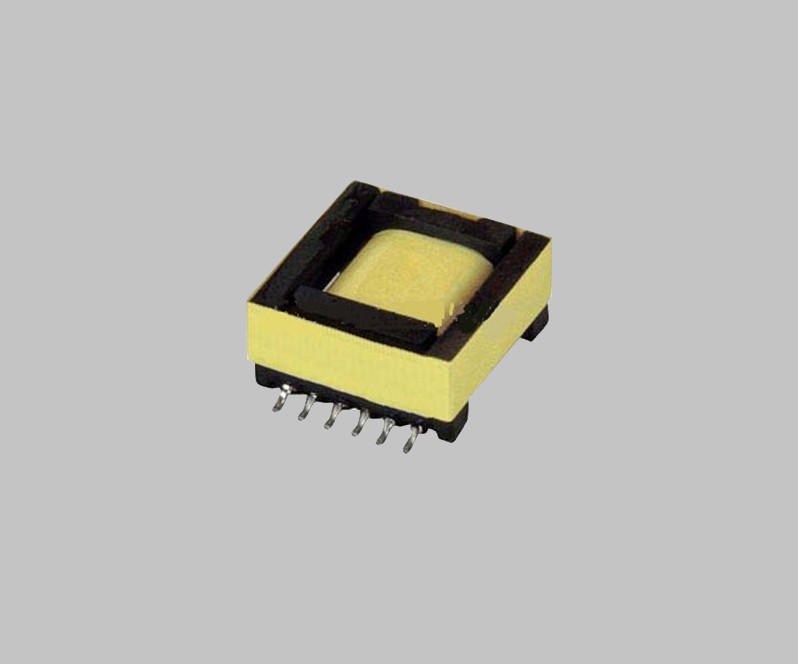
Planar Magnetics: Using PCB traces as windings and flat core structures for improved thermal performance, lower profile, and repeatable manufacturing.
Integrated Magnetics: Combining transformer and inductor functions into a single magnetic component to save space and cost.
Machine Learning: Starting to be used to predict losses and optimize designs faster.
Future trends point towards even higher operating frequencies (driven by Wide Bandgap semiconductors like GaN and SiC), advanced thermal integration (e.g., embedded cooling), development of novel core materials with lower losses at higher flux densities, and increased use of sophisticated multi-physics modeling and AI-driven design tools.
The rise of High Frequency Transformers represents a cornerstone of modern power electronics advancement. By harnessing the benefits of increased switching frequencies, HFTs overcome the size and efficiency limitations of their low-frequency predecessors. While demanding careful attention to high-frequency effects like losses and EMI, the resulting miniaturization, power density gains, and efficiency improvements are indispensable for the next generation of electric vehicles, renewable energy systems, compact consumer devices, and high-performance computing. As materials science, semiconductor technology, and design methodologies continue to evolve, HFTs will remain at the forefront of enabling smaller, lighter, and more efficient power conversion for an electrified future.


