


SMD Inductors vs. Power Inductors: Key Differences
 Jun 30, 2026|
 View:220
You often have to pick between SMD inductors and power inductors. These main differences change how your circuit works. They also affect how long your circuit will last. Picking the right inductor helps you stop problems like current breakdown. It also helps prevent magnetic core damage. These problems can cause more broken products. Top companies like Changzhou Southern Electronic Element Factory Co., Ltd. make good inductors. These are used in cars and electronics. The table below shows how different ways of failing can change reliability:
Failure Mode | Impact on Reliability | Failure Rate |
|---|---|---|
Current Breakdown | Can cause open circuits and more broken products. | More than 100 per batch |
Soldering-related Opens | Fewer broken products, but some reliability problems may happen. | Usually less than 1000 per batch |
Magnetic Core Damage | Makes parts break easier when stressed. | N/A |
You need to know the SMD Inductors vs. Power Inductors: Key Differences. This helps you pick the best one for your project.
Key Takeaways
SMD inductors are tiny and fit well in small devices. They work great in things like smartphones and tablets. Power inductors can handle more current. This makes them good for power supplies and cars. Use SMD inductors for high-frequency jobs. Pick power inductors for low-frequency and high-power needs. Always look at the current rating and frequency your circuit needs. This helps you pick the right inductor. Think about the core material and how you will mount the inductor. This helps make sure it works well and lasts long.
SMD Inductors vs. Power Inductors: Key Differences
SMD Inductors Overview
SMD inductors are found in many new electronic devices. They help control signals and block unwanted noise. SMD means Surface Mount Device. These inductors go right on top of a printed circuit board. They are small, so they fit well in phones and tablets.
The core of SMD inductors is made from ferrite or ceramic. This helps them work well and stay steady. SMD inductors are tiny, between 1 and 5 millimeters. Their inductance can be in microhenries or nanohenries. Most SMD inductors carry less than 1 ampere of current. They are best for signal work and blocking EMI.
SMD inductors make circuits smaller and more dependable. You can add more features in a small space. Designers pick these for tight layouts and tiny products.
Here is a table with common SMD inductor specs:
Specification | Details |
|---|---|
Inductance Accuracy | Within ±20% for predictable circuit behavior |
Temperature Coefficient | Inductance changes less than 15% across full temperature range |
Current Ratings | Usually less than 1 A |
DC Resistance | Relatively higher |
Operating Temperature | 0°C to +85°C |
Packaging | Surface-mount, compatible with automated assembly |
Core Material | Ferrite or ceramic |
Applications | Signal processing, EMI filtering, consumer electronics |
Changzhou Southern Electronic Element Factory Co., Ltd. makes very small and light SMD inductors. Their parts use epoxy resin to last longer. You can pick from many styles, like coaxial horizontal types. The company has many certificates to show their quality and care for customers.
Power Inductors Overview
Power inductors are important in circuits that need high current. You use them in power control, DC-DC converters, and big machines. They are bigger, from 5 to 30 millimeters. You can put them on the surface or use through-hole mounting.
Power inductors have cores made from ferrite, iron powder, or special mixes. These cores let them handle 1 ampere up to 50 amperes or more. Their inductance goes from microhenries to millihenries. Power inductors have very low DC resistance. This helps save energy and cut down on power loss.
Power inductors keep energy and give it out when needed. They help circuits run steady and filter out AC parts. You need them for strong uses, like servers and car electronics.
Here is a table that compares SMD and power inductors:
Parameter | SMD Inductors | Power Inductors |
|---|---|---|
Mounting Type | Surface mount (SMT) | Surface mount or through-hole |
Size | Very compact (1–5 mm) | Larger (5–30 mm) |
Current Rating | Typically <1 A | 1 A to 50 A+ |
Inductance Range | μH to nH | μH to mH |
Core Material | Ferrite or ceramic | Ferrite, iron powder, composite cores |
DCR (DC Resistance) | Relatively higher | Very low |
Operating Temp | 0°C – +85°C | −40°C – +150°C |
Applications | Signal processing, EMI filter | Power management, DC-DC conversion |
Cost | Lower per unit | Higher due to material and size |
Design Goal | Compactness and precision | Power handling and efficiency |
Changzhou Southern Electronic Element Factory Co., Ltd. makes both SMD and power inductors. They have strict checks and skilled engineers. The company can make custom parts and help with circuit design. Their factory is big and has many workers. You can count on their parts to work well.
When you look at SMD Inductors vs. Power Inductors: Key Differences, you see SMD inductors are small and exact. Power inductors are made for high current and saving energy. You pick the right one based on what your circuit needs.
Physical Differences
Size and Form Factor
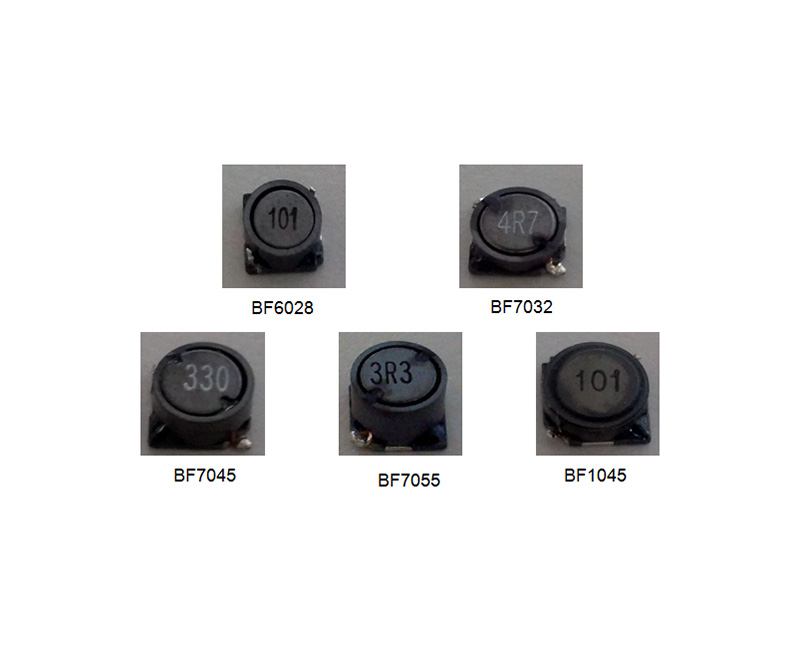
SMD inductors and power inductors look different in size and shape. SMD inductors are very tiny. Most are just a few millimeters wide. You can find them in phones and tablets. Their small size lets you put more parts on a board. This makes products smaller and lighter.
Power inductors are much bigger than SMD inductors. Some are up to 30 millimeters wide. You see them in power supplies and car electronics. They are also in big machines. Their large size helps them handle more current and store more energy. This is important for circuits that run motors or charge batteries.
Tip: Pick SMD inductors if you need to save space. Choose power inductors if your circuit needs high power.
Mounting and Materials
How you mount these inductors is also different. SMD inductors use surface mount technology. You put them right on top of the circuit board. This is good for making lots of products quickly. Power inductors can use surface mount or through-hole mounting. Through-hole mounting makes them stronger. It helps them stay in place if the circuit shakes or gets used a lot.
The materials used in inductors matter a lot. Here are some common materials and what they do:
Ferrite and powdered iron cores help lower core losses. These materials make power inductors work better.
Core materials like ferrite, iron, and laminated steel have special magnetic features. These features change how the inductor works.
Wire materials such as copper, aluminum, and silver affect how well current flows. Copper is used most because it carries electricity well.
Insulation materials like enamel, polyester, and polyimide protect the wire. They also help the coil work better.
When you compare SMD Inductors vs. Power Inductors: Key Differences, you see that size, mounting, and materials all matter. Knowing these things helps you choose the best inductor for your project.
Performance Comparison
Current Handling
It is important to know how much current an inductor can take. SMD inductors are small, so they carry less current. Power inductors can handle a lot more current. This matters if your circuit needs to move lots of electricity, like in power supplies or motor drivers.
Parameter | SMD Inductors | Power Inductors |
|---|---|---|
Current Rating | Typically <1 A | Ranges from 1 A to 50 A+ |
SMD inductors are best for small gadgets. They help save space and make things lighter. Power inductors are better for jobs with high current. They stay cool and work well even with strong current. If you build a high-power circuit, always check the current rating. Make sure it fits what your project needs.
Frequency Response
Frequency response shows how well an inductor works at different speeds. SMD inductors work well at high frequencies. You find them in Bluetooth, GPS, and RF circuits. Power inductors are better at lower frequencies, like in switching power supplies.
Inductor Type | Frequency Response Range | Applications |
|---|---|---|
SMD Inductors | High-frequency | RF, Bluetooth, GPS modules |
Power Inductors | 100 kHz to 10 MHz | Switching regulators |
SMD inductors are great for wireless and fast digital circuits. They help keep signals clear and strong. Always use them below their self-resonant frequency for best results. Power inductors are good for circuits that switch on and off fast, like power converters.
Efficiency
Efficiency means how well an inductor saves energy. SMD inductors have higher DC resistance, so they use more power and can get hot. Power inductors have very low DC resistance. This helps them stay cool and waste less energy.
Parameter | SMD Inductors | Power Inductors |
|---|---|---|
DCR | Relatively higher | Very low for high currents |
Design Goal | Compactness and precision | Power handling and efficiency |
Power inductors with low DCR make less heat and work better.
SMD inductors with high DCR can waste more power.
Always pick an inductor with low DCR for power circuits.
When you look at SMD Inductors vs. Power Inductors: Key Differences, you see current, frequency, and efficiency all matter. You should match the inductor to your circuit for the best results.
Application Areas
SMD Inductor Uses
SMD inductors are in many new gadgets. These small parts help devices work well and last longer. You can find them in smartphones, laptops, and gaming consoles. They make gadgets faster and help batteries last longer. SMD inductors also keep signals clear in audio and video gear.
Here is a table that shows where SMD inductors are used:
Application Area | Description |
|---|---|
Consumer Electronics | Used in smartphones, laptops, and gaming consoles to enhance performance and battery life. |
Telecommunications | Stabilizes power supplies in base stations and routers, ensuring consistent operation. |
Automotive | Supports energy-efficient designs in vehicles. |
You can also see SMD inductors in:
Audio/video equipment
Gaming consoles
Audio amplifiers
Filters
Signal processing circuits
SMD inductors are important in wearables and IoT devices. Their tiny size, sometimes less than 1 mm², lets you add more features in a small space. They help store energy and block noise. This means smartwatches and fitness trackers last longer and work better.
Tip: If you want your device smaller and stronger, pick SMD inductors.
Power Inductor Uses
Power inductors are best for moving lots of energy. You see them in cars, factories, and green energy systems. In cars, power inductors help move energy between batteries and motors. They also help with wireless charging and ADAS.
Here is a table that shows the main uses for power inductors:
Sector | Primary Uses |
|---|---|
Automotive | Manage energy flow between batteries and motors, support wireless charging, and assist in ADAS. |
Industrial | Enhance performance by stabilizing circuits, filtering noise, and supporting energy storage. |
Renewable Energy | Optimize energy storage and distribution in solar and wind systems, ensuring efficient conversion. |
You also find power inductors in power supplies, DC-DC converters, and big machines. They keep circuits steady and block unwanted noise. Power inductors help your equipment run safely and well.
When you compare SMD Inductors vs. Power Inductors: Key Differences, you see SMD inductors are best for small, smart gadgets. Power inductors are for big jobs in cars and factories.
Selection Guide
Choosing Based on Circuit Needs
You have to pick the right inductor for your circuit. Every project needs something different. The table below helps you see how SMD inductors and power inductors compare:
Criteria | SMD Inductors | Power Inductors |
|---|---|---|
Current and Power Handling | Small-signal filtering, RF applications | High current, power transfer |
Frequency Range | High-frequency circuits | Low- to mid-frequency applications |
Space and Weight Constraints | Compact, space-saving designs | Larger, robust power delivery systems |
Thermal and Environmental Conditions | Not for harsh conditions | Withstand high temperatures, vibrations |
Cost and Production Considerations | Cost-effective for mass production | Higher investment for reliability and efficiency |
When you pick an inductor, check the highest current your circuit uses. Pick one with a current rating above what you need. Look at the frequency your circuit works at. SMD inductors are good for high-frequency jobs, like wireless gadgets. Power inductors are better for lower or middle frequencies, like power supplies.
Think about how much room you have on your board. SMD inductors help save space and make things lighter. If your project gets hot or shakes, power inductors are stronger. You should also look at the core material. Ferrite and iron powder cores change how much current the inductor can handle.
Tip: For your circuit to work well, check the inductor’s Q value, self-resonant frequency, and loss ratings.
Cost and Reliability
Cost and reliability are important for every project. SMD inductors usually cost less and are good for making lots of products. Power inductors cost more but work better in tough places.
SMD inductors are best if you need many and want to save money.
Power inductors are a good choice for circuits that must be strong and efficient.
Inductance stability and working under stress help your circuit last longer.
Always check the size and make sure it fits your design.
If you want your product to last and be safe, pick the inductor that fits your needs, not just your budget.
Quick Reference Summary
Key Differences Table
This table helps you see the main differences fast. You can use it to pick between SMD inductors and power inductors. It makes choosing for your project easier.
Feature | SMD Inductors | Power Inductors |
|---|---|---|
Size | Very small (1–5 mm) | Larger (5–30 mm) |
Mounting | Surface mount | Surface or through-hole |
Current Handling | Less than 1 ampere | 1 ampere to 50+ amperes |
Inductance Range | Nanohenries to microhenries | Microhenries to millihenries |
Core Material | Ferrite or ceramic | Ferrite, iron powder, composite |
DC Resistance (DCR) | Higher | Very low |
Main Use | Signal filtering, EMI suppression | Power management, energy storage |
Cost | Lower | Higher |
Application Example | Phones, tablets, wearables | Power supplies, automotive, industry |
Tip: Check this table when you need to choose an inductor quickly.
Actionable Tips
Here are some easy tips for picking the right inductor and supplier:
Make sure the supplier has certifications. This shows the parts are safe and good quality.
See if the supplier sells many types of parts. More choices help you find what you need for different projects.
Ask if the supplier gives technical help. Good support can fix problems and save you time, especially for custom parts.
Read what other customers say. Reviews tell you if the supplier is good in real life.
Check how long shipping takes. Fast shipping helps you finish your project on time.
️ Remember: Picking the right inductor and supplier helps your circuit work well and last longer.
These tips help you make smart choices and stop mistakes. This will help your project do well.
You have learned SMD inductors are good for small, fast devices. Power inductors are better for big currents in tough systems. You should always pick the inductor that fits your project. This helps your circuit work well and last longer. Companies like Changzhou Southern Electronic Element Factory Co., Ltd. can help you make a smart choice:
Support Type | Benefit |
|---|---|
Quality Control | Each inductor is checked before shipping to stop problems. |
Custom Solutions | You get parts made just for your project. |
Performance Focus | They follow rules for the right inductance, current, and resistance. |
Changzhou Southern has important certificates for safety and quality.
Their team can help you design special inductors for better results.
Tip: Always talk to an expert before you pick inductors for your project.
FAQ
What is the main difference between SMD inductors and power inductors?
SMD inductors are used in small circuits. They work well at high frequencies. Power inductors are for circuits with more current. SMD inductors help save space. Power inductors handle more power.
Can you use SMD inductors in power supply circuits?
SMD inductors are not good for high-power circuits. They cannot carry big currents. Power inductors are better for these jobs. They manage more energy and stay cool.
How do you choose the right inductor for your project?
First, check how much current your circuit needs. Also, look at the frequency it uses. Next, see how much space you have on your board. SMD inductors are best for small, fast devices. Power inductors are good for strong circuits with high current.
Why does core material matter in inductors?
Core material affects how the inductor stores energy. It also changes how it handles heat. Ferrite is good for high frequencies. Iron powder is better for higher currents. Always pick the core that fits your circuit.
Where can you buy quality inductors for your project?
You can buy quality inductors from trusted companies. Changzhou Southern Electronic Element Factory Co., Ltd. is one example. They sell many types and give technical help for your design.
Recommended Products

SMD Power Inductor NR Series

SMD Fusible Wire Wound Resistor

SMD Power Inductors-CDRH 2b09/2b11/2b18(LD)/ 2b18(HP) Series CDRH 3b12/3b16/3b16(B)/3b28 Series CDRH 4b18/4b28/5b18/5b28 Series

SMD Power Inductors-CDRH103/104/105 Series

SMD Power Inductors-BF6028/7025/7045/1045 Series

SMD Power Inductors-CDRH83/84/85/86 Series

CD31/32/42/43/51/52/ 53/54/73/75/104/105 Series SMT / SMDpower Inductors,Wirewound Choke


