


Solving EMI Issues with High Impedance Rod Core Chokes
 Aug 31, 2026|
 View:198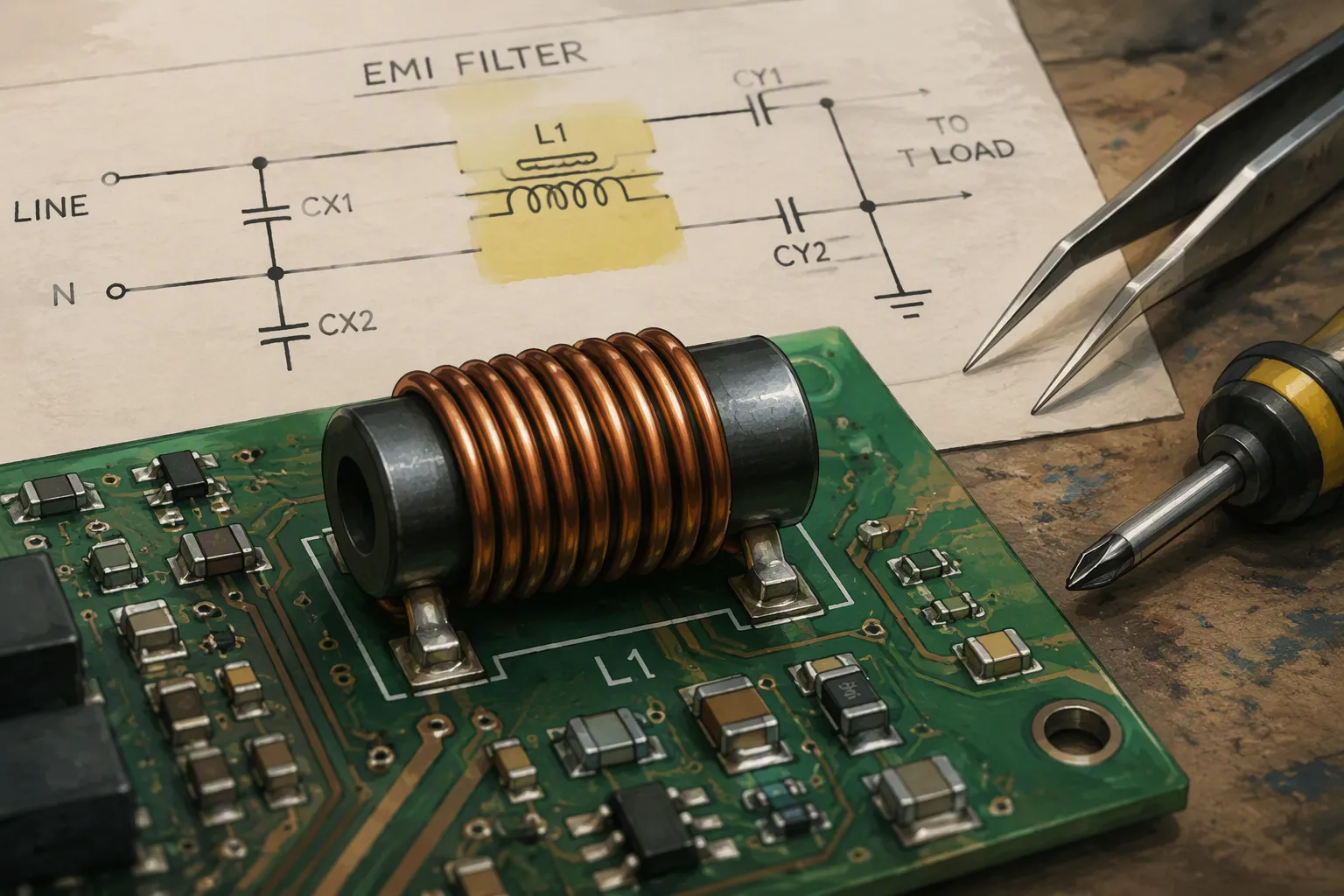
You constantly balance cost, size, and circuit complexity when fixing EMI issues. High impedance rod core chokes offer a small solution for high common-mode and differential-mode inductance without saturating. This post explains how the rod core structure works, compares its performance with traditional chokes, and gives design tips for effective electromagnetic interference suppression. You will learn to use an emi ferrite core for high-frequency noise reduction. The data-driven approach improves signal integrity and helps you meet EMI standards without costly redesigns. This practical solution lowers component count and makes your design simpler. You can get reliable noise suppression in a smaller space. Read on to see how you can solve EMI issues with a proven, cost-effective part.
Key Takeaways
Rod core chokes use an open magnetic path. This path stops saturation. You get stable noise filtering at high currents.
These chokes stop noise from 150 kHz to 3 MHz. They handle the usual switching power supply frequencies.
Rod core chokes are smaller and cheaper than toroidal chokes. They save board space and reduce component count.
Put the choke near the noise source. Keep the loop area small. This helps keep the signal clean.
How High Impedance Rod Core Chokes Work
The Rod Core Structure and Its Impedance Characteristics
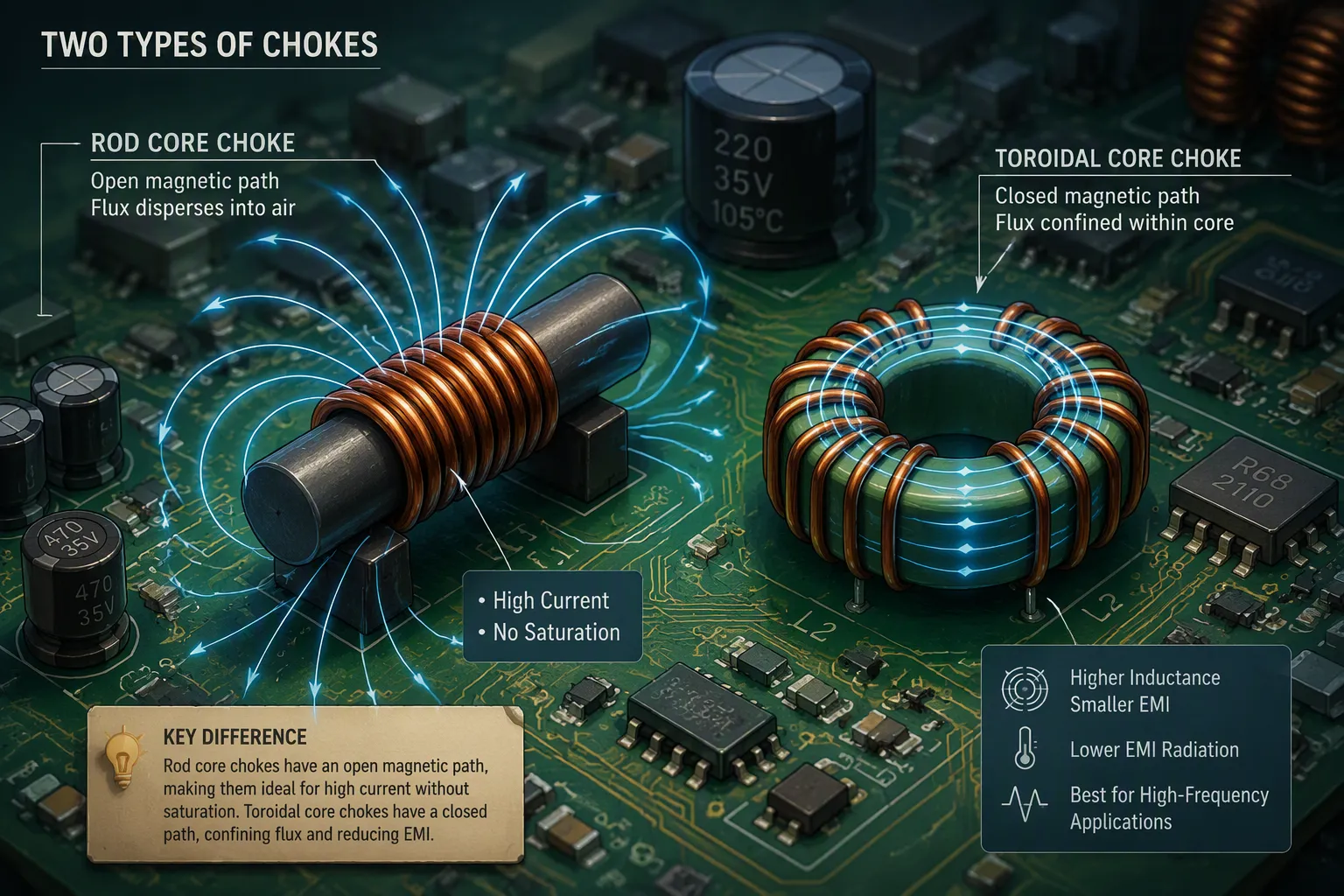
First, you need to know the physical setup. A rod core choke uses a round ferrite rod as its magnetic path. This rod sits inside a wire coil. The magnetic field moves through the rod and then into the air around it. This open path is very different from a closed toroidal design.
Regular common mode chokes use a toroidal core. The toroid is a full ring, so the magnetic field stays inside the core material. This works well, but it limits how much current you can use before saturation happens. The rod core works differently. Its open path lets the magnetic field spread into the air. This spreading stops the core from reaching magnetic saturation, even when you push high currents through the winding.
The impedance of a rod core choke goes up with frequency. At lower frequencies, the inductive reactance is the main factor. As frequency rises, the ferrite material adds resistive losses. Together, these two effects create a high impedance that blocks unwanted noise. You get effective electromagnetic interference filtering across a wide frequency range. The rod shape also gives you flexibility in placement. You can mount it vertically or horizontally to fit your board layout.
Preventing Saturation for Stable Electromagnetic Interference Filtering
Saturation is the enemy of any inductor. When a core saturates, its inductance drops sharply. The choke stops filtering, and noise passes through unchecked. You avoid this problem with a rod core because of the air gap effect. The open magnetic path acts like a distributed air gap. This gap stores energy and stops the core material from reaching its flux limit.
Think about a real example. You have a power supply drawing 5 amps of current. A toroidal choke of similar size might saturate at this level. The rod core choke keeps working because the magnetic field has room to expand into the air. You keep stable inductance and steady noise suppression. This stability matters for signal integrity in your circuit.
The rod core also handles DC bias better than you might think. The air path absorbs the DC flux, so the core material does not saturate. You can use a smaller core for the same current rating. This size reduction leads to lower cost and less board space. You also cut the component count because you do not need extra saturation protection circuits.
Temperature stability adds another benefit. The open structure releases heat better than a closed toroid. You keep the core cooler during operation. Cooler operation means more steady impedance and longer component life. Your emi ferrite core keeps its performance across the operating temperature range of -25°C to +125°C.
You should also think about the winding strategy. Fewer turns give you lower inductance but handle higher currents. More turns increase impedance but add resistance. You balance these factors based on your noise frequency and current needs. The rod core gives you this design freedom without the saturation penalty of a closed core.
The result is a component that delivers high impedance rod core chokes performance in a compact package. You get reliable noise suppression from 150 kHz to 3 MHz. You keep signal integrity without oversizing your components. You achieve this performance at a fraction of the cost of traditional solutions.
EMI Performance: Rod Core vs. Traditional Chokes
Cost and Size Reduction Without Compromising EMI Suppression
When you pick chokes, you always face a trade-off. Traditional toroidal designs work well, but they take up board space and raise material costs. High impedance rod core chokes change this. The open magnetic structure lets you get similar inductance with a smaller core. You reduce the footprint without losing the filtering you need.
Think about the physical difference. A toroidal choke wraps wire around a closed ring. The ring must be big enough to avoid saturation at your operating current. A rod core uses an open path. The magnetic field spreads into the air, so the core material never hits its flux limit. You can use a smaller rod for the same current rating. This size reduction leads directly to cost savings. You buy less ferrite material and less copper wire. You also make assembly easier because the rod shape is simpler to mount and solder.
The cost benefit goes beyond the part itself. A smaller choke means a smaller PCB. You fit more circuitry into the same board area, or you shrink the product enclosure. You cut shipping weight and material use. These savings add up over a production run of thousands of units. The rod core choke also lowers your component count. You do not need extra saturation protection circuits or oversized heatsinks. One compact part handles the job.
Southern Electronic's Common Mode Choke line shows this efficiency. The magnetic core specifications range from SQ1010 to SQ1918, giving you options for different power levels. The rated voltage reaches AC/DC 250V, and the insulation withstand voltage holds at AC1.5kV for 60 seconds. These ratings match what you expect from a traditional choke. You get the same reliability in a smaller package. The operating temperature range spans -25°C to +125°C, so the part works in demanding environments.
Measured Results for High-Frequency Noise from 150 kHz to 3 MHz
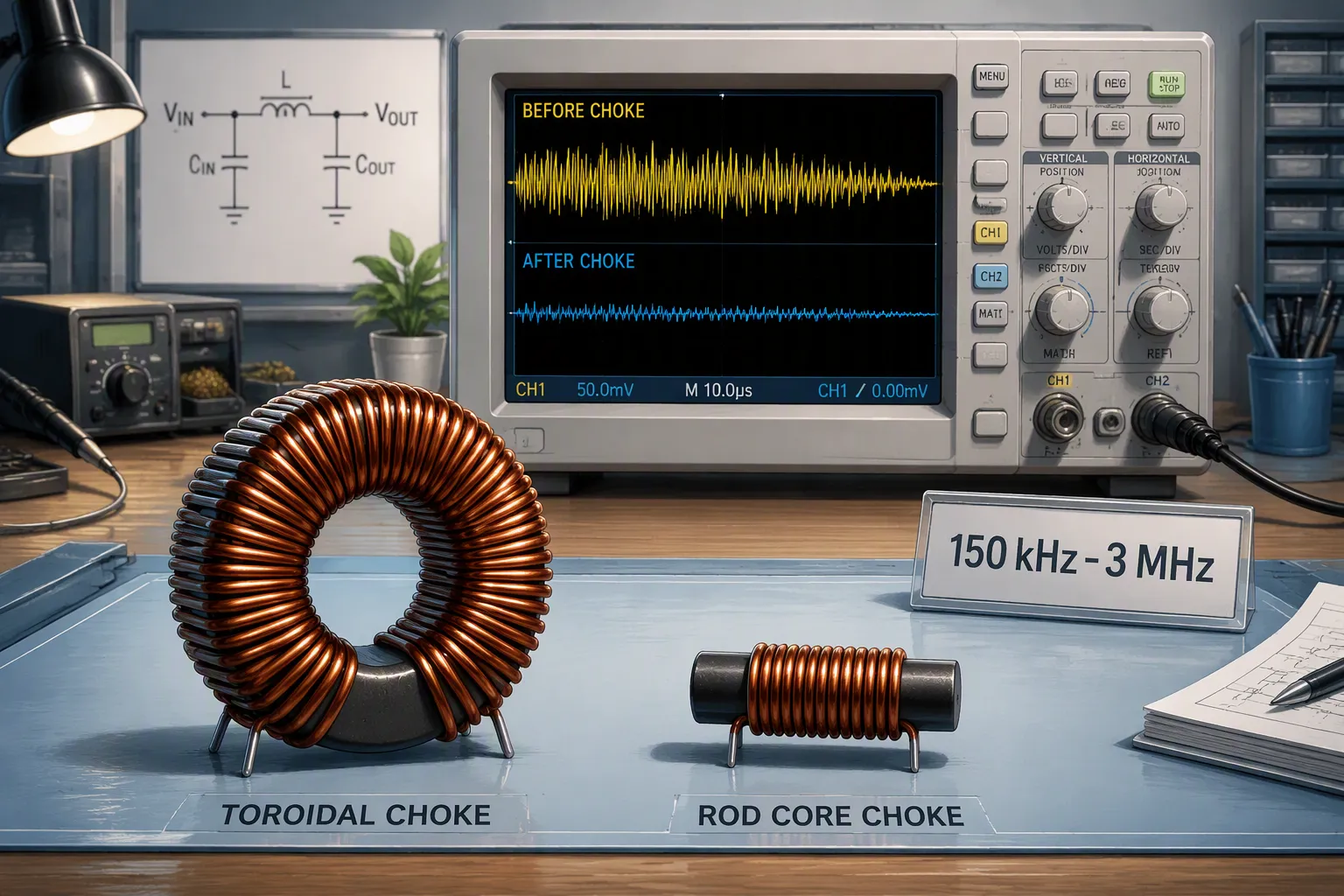
You need data, not promises, when checking noise suppression. The rod core choke delivers measurable performance across the critical frequency band. From 150 kHz to 3 MHz, the impedance stays high enough to block common-mode and differential-mode noise effectively. This range covers most switching power supply emissions and motor drive interference.
The impedance curve rises with frequency. At lower frequencies, inductive reactance dominates. As frequency increases, the ferrite material adds resistive losses. Together, these effects create a broad suppression band. You see consistent attenuation across the entire range, not just at a single frequency. This wide coverage matters because real-world noise contains multiple frequency components. A choke that only filters one narrow band leaves you open to other interference sources.
You can check this performance through standard EMI testing. Place the choke close to the noise source, measure the conducted emissions, and compare the results against your target limits. The rod core choke typically achieves attenuation similar to a larger toroidal choke. In some cases, the open structure provides better high-frequency performance because it reduces parasitic capacitance between windings. You get cleaner signal integrity without adding extra filtering stages.
Southern Electronic's manufacturing quality supports these results. The company holds CE, ISO9001, IATF16949, and UL certifications. These credentials confirm consistent production standards and reliable performance. Every choke undergoes strict quality control, so you can trust the measured data from one unit to match the next. The company produces over 200 million pieces annually, showing proven manufacturing capability at scale.
The power range spans 20W to 200W depending on the model you select. This flexibility lets you match the choke to your specific application. You choose the core size and winding configuration that delivers the impedance you need. The result is effective electromagnetic interference filtering without oversizing your components. You meet EMI standards while keeping your design compact and cost-effective. The emi ferrite core inside each choke provides the high-frequency performance you need for reliable operation.
Design Guidelines for High-Frequency Noise Suppression
Selecting Core Material and Turns for Optimal Impedance
Start with the core size. Southern Electronic offers magnetic core specs: SQ1010, SQ1212, SQ1515, and SQ1918. Each size handles different power levels. Match the core to your current draw and board space. Larger cores give more room for windings. Smaller cores save space but limit turns.
The turns count directly controls impedance. You need to know how turns, current, and saturation relate:
Magnetomotive force (mmf) equals turns (N) times current (I): mmf = N × I.
More turns raise the mmf at the same current level.
Higher mmf pushes the core toward magnetic saturation at lower currents.
Once saturated, extra current creates no more magnetic flux.
The inductor then loses inductance, lowering its impedance to AC current.
Saturation Current is the DC bias current that drops inductance by a set amount (usually 10% for ferrite cores) from the starting zero-bias value. The core holds only a fixed magnetic flux density. Past that point, permeability falls, and so does inductance.
Balance turns against saturation. More turns give higher impedance for better noise blocking. But too many turns cut your saturation current margin. Check your max operating current against the saturation point. Leave room for transients and inrush currents.
The rod core's open magnetic path helps here. The air gap effect delays saturation. You can use more turns than a similar toroidal core without hitting the flux limit. This benefit lets you get the impedance you need in a smaller size.
Layout and Integration Tips for Common Mode Choke Applications
Placement matters as much as part choice. Mount the choke as close to the noise source as possible. This spot stops interference before it spreads across your board. Long traces act like antennas. They pick up noise and radiate it to other circuits. Short traces between the source and choke keep the loop area small.
Also minimize the loop area on the return path. Current flows out through the choke and returns via the ground plane. A wide, short return path cuts radiated emissions. Keep sensitive circuits away from the choke's magnetic field. The open rod structure does leak some flux into nearby space. Orient the rod so its field does not couple into close traces or parts.
Integrate the choke into your design without extra circuitry. The high impedance rod core chokes handle both common-mode and differential-mode noise in one part. You do not need separate filters for each mode. This simplicity lowers your component count and design time.
Southern Electronic offers one-stop customization for non-standard needs. You can request specific core sizes, winding setups, or termination styles. Their engineering team designs the part to match your exact frequency and current needs. You get a component that fits your layout perfectly. This service helps you keep signal integrity while meeting EMI targets. The emi ferrite core inside each choke delivers steady high-frequency noise rejection across your operating range.
High impedance rod core chokes give you real benefits for your next design. You get strong EMI filtering from 150 kHz to 3 MHz in a small, low-cost package. The open magnetic path stops saturation, so you keep stable performance even at high currents. This design also saves board space and reduces part count, which makes your layout simpler.
These chokes are a practical choice over traditional toroidal common-mode chokes. You get similar noise control with lower cost and a smaller size. Your signal quality stays high even in tough working conditions.
Think about this solution for your next project. Consider Southern Electronic's Common Mode Choke as a reliable, certified option. Their CE, ISO9001, and IATF16949 certifications show reliable quality. Talk to their team about your needs.
FAQ
How does a rod core choke prevent saturation at high currents?
The open magnetic path lets the field spread into the air. This stops the core from hitting its flux limit. You keep steady inductance even with high currents. Saturation does not occur.
What frequency range does the rod core choke cover for filtering?
You get good suppression from 150 kHz to 3 MHz. This range covers most switching power supply noise. You get steady attenuation across the entire band.
Can you get custom specifications for your application?
Yes, Southern Electronic offers one-stop customization. You can ask for different core sizes, winding setups, or termination styles. Their engineering team fits the part to your exact needs.
What certifications does Southern Electronic hold for this choke?
The choke has CE, ISO9001, IATF16949, and UL certifications. These standards confirm steady production quality. You can trust the performance in every unit.
What temperature range does the rod core choke handle?
It works from -25°C to +125°C. The open structure releases heat better than a closed toroid. You keep stable impedance and longer component life.
Recommended Products

CDRH124/125/127/129 Series Smt, Coil Choke, Wirewound Inductor

CDRH62/64/73/74 Series Smt Power Inductor, Choke Coil Inductor, Wire wound Choke

CD31/32/42/43/51/52/ 53/54/73/75/104/105 Series SMT / SMDpower Inductors,Wirewound Choke

Axial Type Inductor (Horizontal), Choke Coil Inductor, Inductor, Wirewound Inductor

Choke Coil Power Inductor/Common Mode Inductor with RoHS

Flat Wire Common Mode Choke-SQ1010 (Horizontal)

High current common Mode Choke Coil-SQ1010 (Vertical)

SQ1212 Common Mode Current Choke-(Vertical Ultra-thin Frame)


Recent News
1.How to Choose the Right Common-Mode Choke for Power Electronics
2026-03-122.What are the best common mode chokes for EMI suppression?
2026-05-113.Top 10 Applications of Choke Inductors in 2026
2026-06-154.Solving EMI Issues with High Impedance Rod Core Chokes
2026-08-315.Top 10 Choke Coil Inductor Manufacturers Leading the Market in 2026
2026-01-216.How Does it Work? Common Mode Chokes
2025-10-317.What is the difference between common mode choke and differential mode choke?
2025-08-288.What is the difference between common mode and differential mode choke?
2025-08-229.What is choke coil inductor?
2025-02-2410.How many turns for common mode choke?
2024-12-11

