


 Nov 14, 2025
 View:1884
You use a high frequency transformer to change alternating voltage, current, and impedance in modern electronics. This device works by electromagnetic induction and magnetic coupling. It makes energy transfer fast and efficient. It is different from a standard transformer. It can handle much higher frequencies. This helps it work better in small systems. Many industries now use these transformers. The global market may reach $3.5 billion by 2031. It is expected to grow at a rate of 6.7% each year.
Key Takeaways
High frequency transformers help change voltage, current, and impedance. They are very important in modern electronics like computers and electric cars.
These transformers work at more than 20 kHz. This lets them be smaller and lighter than regular transformers. Regular transformers work at 50 or 60 Hz.
It is important to know the turns ratio. The turns ratio shows how voltage and current will change. This helps your circuits work their best.
Picking the right core material and winding method is important. It makes the transformer work better and lose less energy. This helps your transformer do a better job.
High frequency transformers are needed for clean energy and new electronics. They help move power faster and more reliably.
High Frequency Transformer Basics
Definition And Function
A high frequency transformer changes voltage, current, and impedance. It works well in systems that need quick power transfer. You see it in switch-mode power supplies and DC-DC converters. It is also used in inverters. Its main jobs are power conversion, impedance matching, galvanic isolation, and pulse transformation. The table below explains these jobs:
| Function | Description |
|---|---|
| Power Conversion and Conditioning | Used in power supplies and converters for voltage change and isolation. |
| Impedance Matching | Matches impedance in RF and telecom for better power and signal. |
| Galvanic Isolation | Keeps circuits apart for safety and less noise. |
| Pulse Transformation | Changes pulse shapes in radar and medical tools. |
Key Differences From Standard Transformers
high frequency transformer are not the same as standard ones. The biggest difference is the frequency they use. High frequency transformers work above 20kHz. Standard transformers work at 50 or 60Hz. This makes high frequency transformers smaller and lighter. They use ferrite cores and thin wires. Standard transformers use iron or steel cores and thick wires. The table below compares them:
| Feature | High Frequency Transformers | Low Frequency Transformers |
|---|---|---|
| Operating Frequency | kHz range, smaller size | 50 or 60 Hz, bigger and heavier |
| Construction | Ferrite cores, thin wire | Iron/steel cores, thick copper windings |
| Electrical Isolation | Full isolation from shore power | Electrical isolation, system protection |
| Environmental Resilience | Not as tough against stress | Tougher against moisture, dust, heat |
| Power Quality | Can make noise, needs careful control | Good conversion, little distortion |
Importance Of Frequency
Frequency is very important for transformers. When frequency goes up, you need fewer winding turns. This can lower copper loss. But higher frequency also raises iron loss. Iron loss includes hysteresis and eddy current losses. At very high frequency, iron loss is a big problem. High frequency transformers are made to balance these effects. This helps them work better and be smaller. You find these transformers in power converters and modern electronics. They save space and boost performance. New core materials and switching devices make them even more helpful now.
Working Principle
When you know how a high frequency transformer works, you see how it moves energy fast. There are three main ideas to remember. These are electromagnetic induction, magnetic coupling, and changing voltage, current, and impedance.
Electromagnetic Induction
Electromagnetic induction is very important in every transformer. If you send an alternating current into the primary coil, a changing magnetic field is made. This field goes through the core and reaches the secondary coil. The changing field makes a voltage appear in the secondary coil. This is how energy moves from one coil to the other.
high frequency transformer use electromagnetic induction too, but they work much faster. The table below shows what changes when the frequency is higher:
| Aspect | High-Frequency Transformers | Low-Frequency Transformers |
|---|---|---|
| Operating Principle | Operate on electromagnetic induction | Operate on electromagnetic induction |
| Frequency | Designed for high-frequency applications | Designed for low-frequency applications |
| Core Materials | Typically use less material due to higher frequency | Use more material, often silicon steel sheets |
| Size | Smaller in size with fewer coil turns | Larger in size with more coil turns |
| Energy Transmission | Transmit energy multiple times in a short period | Transmit energy less frequently |
| Efficiency | Higher efficiency due to reduced size | Lower efficiency, requiring larger volume for heat dissipation |
High frequency transformers can move energy many times in a short time. This makes them smaller and more efficient than low frequency transformers.
Magnetic Coupling
Magnetic coupling lets energy move from the primary coil to the secondary coil without touching. The core helps guide the magnetic field between the coils. When the frequency is higher, magnetic coupling works even better. Smaller transformers with more turns can pick up fast signals well. Rolled transformers can handle higher frequencies better than big ones.
Energy transfer is better at high frequencies.
Smaller cores and thinner wires can be used.
Fast signals are picked up better in wireless and power electronics.
Strong magnetic coupling is very important. It helps you change voltage and keep circuits apart in small designs.
Voltage, Current, And Impedance Conversion
A high frequency transformer can change voltage, current, and impedance in circuits. You use it in circuits that work above 10 kHz. The main idea is simple. The number of turns in each coil sets how much the voltage and current change. The impedance changes by the square of the turns ratio.
| Transformation Ratio | Description |
|---|---|
| Voltage Ratio | Equals the turns ratio of the transformer. |
| Current Ratio | Also equals the turns ratio of the transformer. |
| Impedance Ratio | Equals the square of the turns ratio (n²). |
You use these ratios to fit your circuit’s needs. You can raise or lower voltage as needed. You can also match impedance for better power transfer and less signal loss. The transformer keeps circuits apart for safety and less noise.
Note: The working principle of a high frequency transformer uses electromagnetic induction and magnetic coupling. Higher frequency makes it more efficient and smaller. You get quick, safe voltage changes and energy transfer in modern electronics.
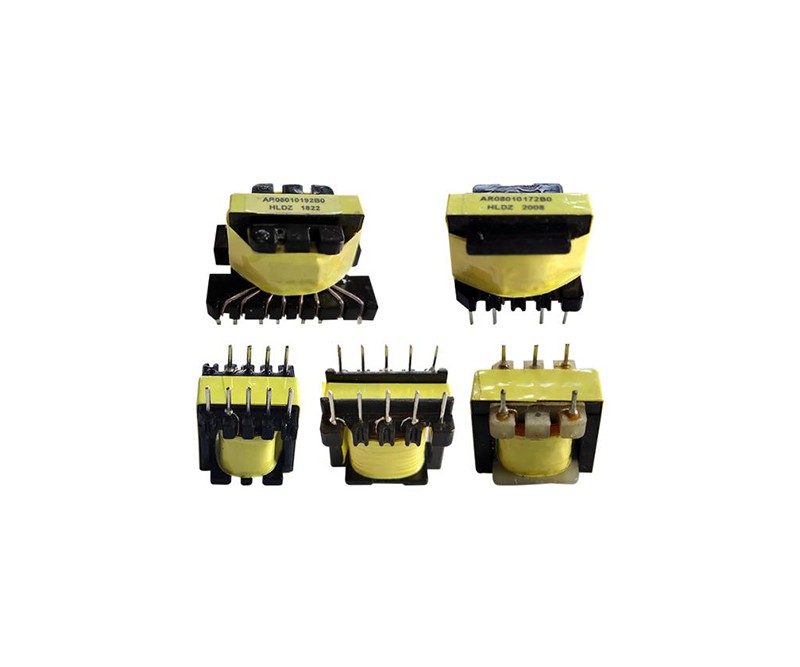
Design Features
Core Materials
When picking a core for a high frequency transformer, you need to think about how the material changes how it works. Ferrite ceramics are used a lot. They let strong magnetic flux pass and do not let much electricity through. But they can get too hot and break easily. Grain-oriented silicon steel is good for many transformers and saves energy. It can cost more money. Amorphous steel has low losses when used at high frequencies. But it is also pricey. Iron cores stay steady when the temperature changes. They lose more energy than other core materials. The table below shows how these core materials are different:
| Core Material | Advantages | Disadvantages |
|---|---|---|
| Ferrite Ceramics | Low resistance, good magnetic flux | Brittle, low saturation, can overheat |
| Grain-Oriented Silicon Steel | Energy-efficient, versatile | Expensive |
| Amorphous Steel | Low losses at high frequency | Expensive |
| Iron Cores | Stable in temperature and flux | Higher core losses |
You also have to choose the right core shape. Toroidal cores help lower electromagnetic noise. They work well in power supplies. E-shaped cores give strong magnetic coupling. This is helpful in data and telecom jobs.
Winding Methods
How you wind the coils in a transformer changes how well it works. At high frequencies, you need to think about the skin effect and proximity effect. These effects make current flow only on the outside of the wire or near other wires. This can waste energy. Litz wire or foil windings can help lower these losses. Picking the right wire thickness is important. Thin wires are good for high frequencies. If wires are too thin, copper loss goes up. You should also look at how you put the windings together. Interleaving or keeping layers apart can lower proximity losses and make your transformer work better.
| Aspect | Impact |
|---|---|
| Winding Current Distribution | Reduces power losses |
| Winding Thickness | Affects copper loss at high frequencies |
| Material Selection | Impacts efficiency and iron loss |
Tip: A good winding design helps you handle high voltages. It also keeps your transformer cool.
Insulation And Safety
You need strong insulation in your transformer to keep it safe and stop breakdowns. Rules like IEC 61558 tell you how much insulation you need. They also say how much space you need between wires and parts to stop sparks. If your transformer works above 750V, you should test it for partial discharge. Using the right insulation and following safety rules helps your transformer last longer and stay safe. Groups like OSHA, NEC, and IEEE make rules you must follow. Following these rules keeps people safe and helps others trust your design.
Note: Always check for electrical stress, moisture, and vibration. Good design and regular testing help you stop common transformer problems.
Applications And Advantages
Common Uses
High frequency transformers are found in many devices today. They help control and power electronics you use every day. Here are some ways they are used:
Computers and TVs use these transformers for better power conversion.
Phones and electric cars charge with special transformer circuits.
Telecom equipment uses transformers to keep signals safe.
RF amplifiers and processors use them to match impedance.
LED lights and ballasts use step-down transformer designs.
MRI machines use transformer circuits for exact power delivery.
Aerospace and defense systems use light transformer modules for power.
Solar and wind inverters use transformers for energy conversion.
Welding machines and heaters use transformer technology for accuracy.
Efficiency And Size Benefits
High frequency transformers are efficient and small. They make devices lighter and save space. You also use less energy. The table below compares high frequency transformers to traditional ones:
| Feature | High Frequency Transformer | Traditional Transformer |
|---|---|---|
| Size | Smaller | Larger |
| Conversion Efficiency | Higher | Lower |
| Power Density | Better | Poorer |
| Material Usage | Reduced | Higher |
| Thermal Characteristics | Improved | Standard |
Ferrite core transformers work at 85% to 95% efficiency. They waste less energy and make less heat. Step-up and step-down transformer designs help reach high efficiency. You get small and light transformer modules for portable devices.
Tip: Using high frequency transformers helps you lower costs and improve how your devices work.
Limitations
High frequency transformers have some limits you should know. They can cost more because they use special materials. They may need more care and fixing. Fast switching can cause noise and distortion in outputs. You need good design to control heat and avoid problems. Power frequency transformers often give better waveforms and need less care. High frequency transformers may not work as well with heavy loads.
Note: Always check your transformer for safety, heat control, and output quality before using it in important systems.
You now know how a high frequency transformer works. You also know why it is important. The table below shows the main ideas:
| Key Point | Description |
|---|---|
| Definition | Moves power at 20 MHz to 1000 MHz with electromagnetic induction. |
| Working Principle | Uses soft magnetic materials to move energy well. |
| Applications | Powers new electronics and communication systems with small size. |
You get less core loss and less signal problems in your devices.
These transformers help electric cars and clean energy work better.
You have faster, smaller, and more dependable systems for today’s world.
FAQ
What is the main job of a high frequency transformer?
You use a high frequency transformer to change voltage and current quickly. It helps you match the turns ratio for your needs. You also get energy isolation between circuits, which keeps your devices safe.
How does the turns ratio affect voltage and current?
The turns ratio sets how much voltage and current change. If you increase the turns ratio, you raise the output voltage. If you lower the turns ratio, you get more current. You must pick the right turns ratio for your circuit.
Why do you need a specific turns ratio in your design?
You need a specific turns ratio to match your device’s needs. The turns ratio helps you control power flow. You can use the turns ratio to step up or step down voltage. The right turns ratio gives you better efficiency.
Can you use high frequency transformers for energy isolation?
You use high frequency transformers for energy isolation. The turns ratio lets you keep circuits separate. This protects your devices from noise and faults. You get safe and reliable operation.
What happens if you choose the wrong turns ratio?
If you pick the wrong turns ratio, your device may not work well. You could get too much voltage or not enough current. The wrong turns ratio can cause overheating or damage. Always check the turns ratio before you build your circuit.


